Sodium-ion batteries have been knocking on lithium-ion’s door for a while. That’s because both battery types use ions from their active metals. However, sodium is far more abundant than lithium, meaning its batteries should be less expensive. But one problem has kept affordable sodium-ion batteries from competing with lithium-ion head on.
Argonne Finds a Fix For Cracking Sodium Cathodes
Argonne National Laboratory explains how the sodium cathode, to which electrons return from an electrical circuit, rapidly deteriorates with repeated cycles. A team of scientists there succeeded in resolving this concern.
In so doing, they built out an earlier design for a lithium-ion oxide battery, that demonstrated high energy storage capacity and long life. There are several other overlaps between lithium-ion and sodium-ion cells which facilitate reciprocal research.
However, in this instance, the Argonne researchers focused on a particular sodium-ion cathode characteristic, namely early degradation and cracking. Both this electrode, and its lithium-ion counterpart, contain microscopic nickel, cobalt, iron, or manganese particles that are unevenly distributed.
Each of these metals has a different purpose. Some are in the core, facilitating high capacity. While others form a protective shell, providing stability during charging and discharging. This factor proved to be a key to longer-lasting, affordable sodium-ion batteries.
Affordable Sodium-Ion Batteries With Stable Cathodes
The cost of a sodium-ion battery distributes throughout its lifetime. The Argonne scientists understood they could reduce this cost, by extending battery lifespan. They also knew that the deterioration of the cathode coincided with cracks in the particles, that appeared as the battery aged.
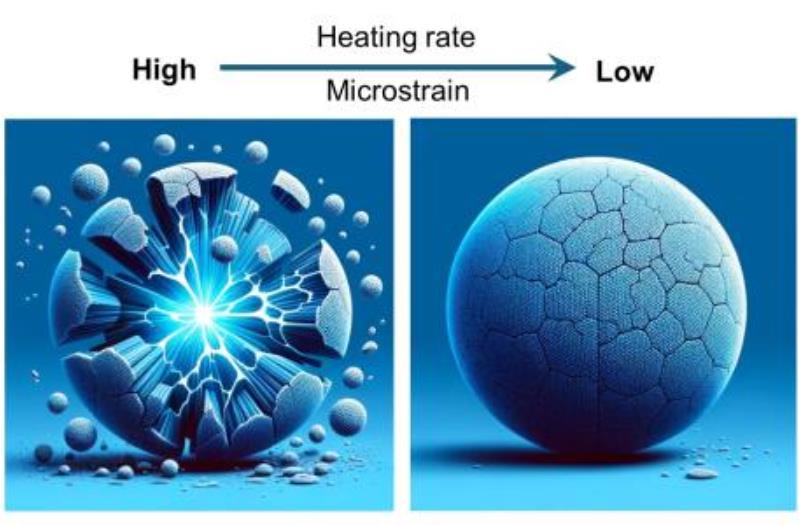
The team created experimental sodium-ion cathodes using different heat profiles. The cracks appeared when the temperature reached approximately 250 degrees C. The deterioration began in the core and the core-shell boundary, before it spread to the surface.
“Preventing cracks during cathode synthesis pays big dividends when the cathode is later charged and discharged,” a team member explains. “And while sodium-ion batteries do not yet have sufficient energy density to power vehicles over long distances, they are ideal for urban driving.”
More Information
U.S. Sodium-Ion Battery Manufacture Begins
Electrode Binding Agent For Sodium-ion