Alternating current (AC), as the name suggests, periodically reverses the current flow back and forth. This method reduces load losses in distribution systems. Whereas direct current (DC) always flows in the same direction, which is ideal for electronic devices requiring stable flow. Today we ask are batteries AC or DC current, and the implications thereof.
So Why Do Batteries Produce DC Current?
The chemistry in batteries delivers a smooth, steady flow of energy for as long as the ions last. Therefore, it follows that a battery will deliver this power as direct current. Early battery designers did not deliberately choose DC current though. It was simply the ‘natural result’ of the process.
Electricity distribution grids, on the other hand, deliver AC alternating current. This is not an ‘accident of science’ this time. George Westinghouse came up with the idea in the 1880’s to compete with Thomas Edison’s DC power network, and eventually knocked him off his perch.
Our Dual System of Electricity Delivery
George Westinghouse could not change the direct current nature of batteries, even if he wanted to, because it was a natural phenomenon. Nobody asks are batteries AC or DC current anymore, because that is just the way it is.
Electrical appliance manufacturers soon standardized on AC current, because that was where the most energy was. The grids that delivered AC current spread out like spiderwebs, thanks to lower transmission load losses.
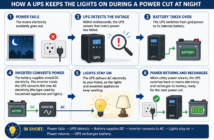
Inverters form a reliable bridge between these two systems, by converting AC current to DC current and vice versa. They enable us to charge our DC batteries from AC electrical sources. And then reverse the current form, so our batteries can power our AC devices.
More Information
Direct and Alternating Electric Current Compared