

 Battery Basics
A Lithium Battery in the Kitchen for Cook
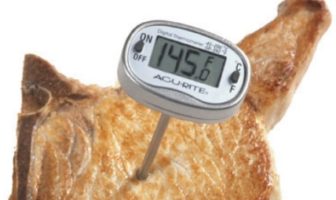
Every cook needs a lithium battery in the kitchen to power the electronic food thermometer.…

Electricity has always intrigued me. I have been writing about batteries and energy storage for more than ten years, and have published over 4,000 articles on this website. During that time, I have researched developments across lead-acid, lithium-ion, sodium-ion, flow batteries, and emerging energy-storage technologies. My goal is to explain complex battery concepts in clear, practical language that anyone can understand. My writing career began unexpectedly after leaving the corporate world. What started as a search for a new direction gradually became a fascination with batteries, renewable energy, and the science that powers modern life. Writing may not have made me wealthy, but it has given me the opportunity to explore an industry that continues to evolve in remarkable ways.
Battery Basics
Every cook needs a lithium battery in the kitchen to power the electronic food thermometer.…
 Battery Basics
Christmas is upon us, and the shops are going crazy. Soon the family will gather…
 Battery Basics
On the fourth day of Christmas, our true love traditionally gives us many gifts. These…
 Featured
Flash charging used to mean leaving a smartphone plugged in for 15 minutes. If we…
 Featured
Details are still secret but we could be charging a car capacitor in seconds shortly…
 Battery Experiments
To complete this safe, simple school experiment, you will need some low tech resources that…
 Battery Basics
Electrolytic capacitors have polarity, unlike ceramic and film ones that cannot handle direct current. Their…
 Battery Basics
Film capacitors are functionally similar to ceramic capacitors because they are both non-polarized. We can…
 Battery Basics
Ceramic capacitors have a ceramic core separating two metal plates enclosed in a protective cover.…
 Battery Basics
Capacitors are like batteries, in that both store electricity. Both also have two terminals separated…