Scientists at Surrey University in Guildford, England, were pondering over a familiar problem back in 2023. How do we extract all the lithium from spent batteries they wondered, without causing environmental pollution? If a bioelectrochemical system recycles lithium cost-effectively, they realized, it could do the trick.
Let’s Recycle Lithium Bioelectrochemically From Batteries
“We will design and optimize a bioelectrochemical system to recover high purity lithium,” they promised themselves. “By exploiting the ability of some microbial species to transfer electrons to external acceptors”.
It was already an established fact that biotechnology held promise for recovering metals. These methods deployed the metabolic abilities of microorganisms to replicate physiochemical principles.
If the bioelectrochemical system we develop recycles lithium that way, the researchers realized, this could be a groundbreaking discovery. One example could be exploiting the capability of some microbial species to transfer lithium electrons to solid electron acceptors.
How This Bioelectrochemical Approach Could Work in Practice
We have not come across this technology before, and are scrambling to understand it. The following is a summary we found on the abstract of their report we link to below:
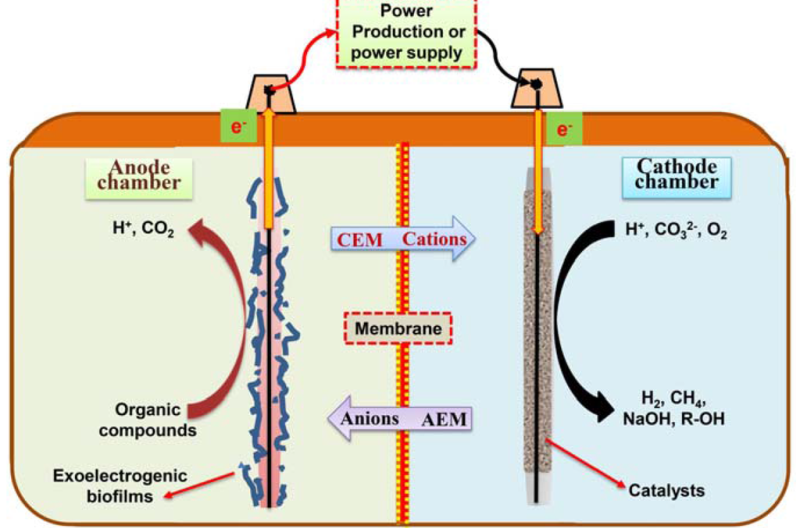
- In principle, microbial fuel cells degrade the anodes of organic compounds to produce electrical energy.
- Microorganisms break down nutrients in the anodes of organic compounds, following that principle.
- As they degrade the nutrients, they transfer electrons to the anode, which circulate to the cathode.
- This process generates an electrical current, as the electrons reduce (populate) an electron acceptor.
- It is then possible to transfer these electrons to another location, thereby recovering the active cathode material.
Applying These Principles to Recovering Lithium Metal
The researchers at Surrey University in England, used the same biotechnology to recover up to 95% of lithium from spent lithium batteries. They used selected microorganisms to transfer the metal’s electrons, and extract them using a cleaner, more sustainable approach.
They will now find ways to expand the technology’s applications, to include recovering cobalt, nickel, and manganese. “While challenging,” they say, “this is a crucial step towards establishing a truly circular battery economy.”
More Information
Organic-Soil Microbial Fuel Cells
Bio-Integrated Batteries for Medical Devices
Preview Image: Bioelectrochemical System Technology
Surrey University News Item February 2023