

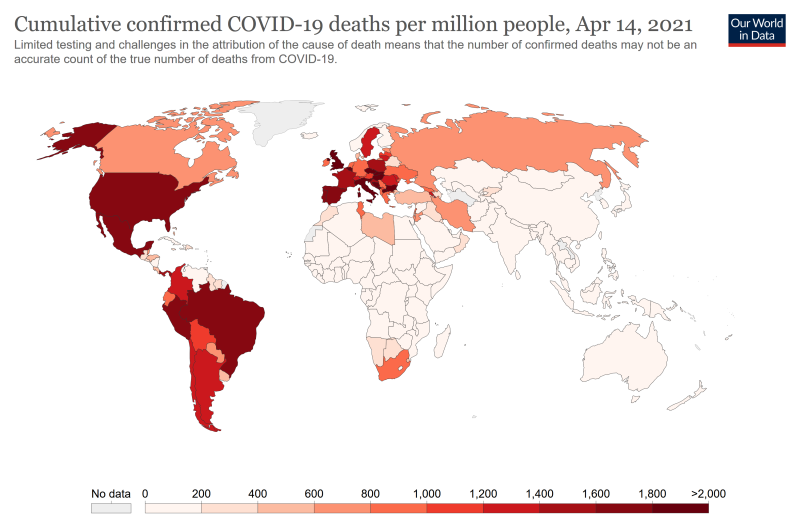
Reuters news service posted an update on Brazil’s P1 coronavirus it says is ‘raising international alarm’. That’s because it may be ‘mutating in ways that could make it better able to evade antibodies’. Brazil’s public health institute Fiocruz enjoys status as one of the world’s main public health research institutions. Now its researchers have found new mutations in the virus’ spike region.
The Mutations in Brazil’s P1 Coronavirus Spike Region
Viruses use their spike regions to invade and infect host cells. It’s a vaccine’s job to prevent this, and destroy any invaders that slip past. However, the Fiocruz researchers warn the mutated spike regions could be resistant to COVID-19 vaccines, and their antibodies.
This has therefore ‘potentially grave implications for the severity of the outbreak in Latin America’s most populous nation Brazil,’ Reuters believes. This could be ‘another escape mechanism’ the virus uses to evade antibodies, Fiocruz study lead Felipe Naveca fears. He is based in the Amazon city of Manaus where doctors first detected the P1 virus on January 6, 2021.
What We Now Know About the P1 Virus
Brazil’s P1 coronavirus mutations appear similar to variant B.1.351 that first appeared in South Africa on December 18, 2020. And it may be up to 2.5 times more contagious than the original coronavirus, and also more resistant to antibodies. France added to Brazil’s isolation by suspending all flights on April 14, 2021.
Brazil’s large second wave, and younger patients in intensive care are warnings vaccines could become less effective with further mutations.
So says Ester Sabino, a scientist at the faculty of medicine of the University of Sao Paulo. ‘If you have a high level of transmission, like you have in Brazil at the moment. Then your risk of new mutations and variants increases.’
Related
Latest COVID Spike Affecting Younger People
Battles Between Spike Proteins and Vaccines
Preview Image: Cumulative Confirmed COVID-19 Deaths


