Charging lead-acid battery banks is entirely safe when done properly. In fact, the design is still the safest, given recent incidents involving smart phone batteries exploding and warnings to parents of small children ingesting lithium-ion. Nonetheless, caution is necessary. This is because charging lead-acid batteries releases flammable hydrogen gas.
Safety Considerations when Charging Lead-Acid Battery Banks
-
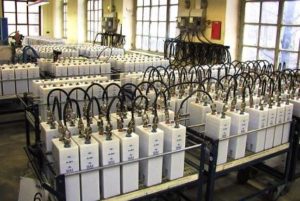
Back-Up Batteries: Firmenarchiv GAZ: CC 3.0 Recycle the battery away from welding activity and open flames. Ensure good ventilation to prevent accumulation of gas. Alert people in the area especially anyone that smokes. Remove watches, rings and jewelry. Indeed anything metallic you are wearing that could cause a spark.
- Put on safety goggles and plastic gloves. Remove anything covering the vent caps, for example a lid. Leave the filler caps on. Their vent holes will allow hydrogen gas to escape. Wipe the top of the battery so it is free of dirt and moisture.
-

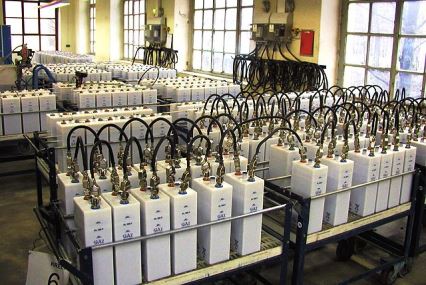
Datacenter Backup: Jelson25: CC 3.0 Make sure the charging points on the lead-acid battery are scrupulously clean so you have a proper connection. Connect the charging cables securely and apply the external power source. Keep the top of the battery dry at all times to avoid it becoming an electrical hazard.
- Wait until the battery has completely charged. Not doing so can reduce battery life. Turn off the external power source before removing it from the battery. Carefully remove the connecting device at the electrode.

Avoid Topping-Up Electrolyte during the Charging Cycle
Avoid topping up electrolyte when charging lead-acid battery banks. The plates absorb the liquid during recycling and release it afterwards. Wait until the process is over and replace the lesser amount that evaporated.
While recharging lead-acid batteries is safe when following the correct procedures, we must be mindful of the presence of explosive gas, corrosive acid, and 100s of amps of electric current. Did you enjoy this post? Did you find it useful? Would you like to reply below?
Related