Climate change is combining forces with ancient ice cores to reveal a little more about how fragile life really is. Microscopic organisms in Greenland and in water everywhere are providing clues of how we may have to survive in the future. Take these diatoms date stamping where we have come from and where we might have to survive in future.
But Just Who / What are Diatoms Date Stamping?
All of life really is under focus: Diatoms are a major group of algae and so at the bottom of the food chain. Render them extinct and amazingly we could create a reaction too immense for our technology to compute. Just by way of introduction, they generate 20% of the oxygen produced on our planet annually.
Diatoms also contribute to almost half the organic matter found in the oceans. Moreover, 27 million tons of their shell dust fertilize the entire Amazon Basin annually. In this case, winds transport the microscopic skeletons from a dried-up lake covering most of the Sahara. Therefore these diatoms date stamping the past could reveal great secrets of life itself.
Uncovering Great Secrets of the Past in Greenland
It’s important to compare life in the past with life now, to understand the future effects of global warming.There are uncounted numbers of unicellular diatoms living in the oceans, waterways and soils of our world.
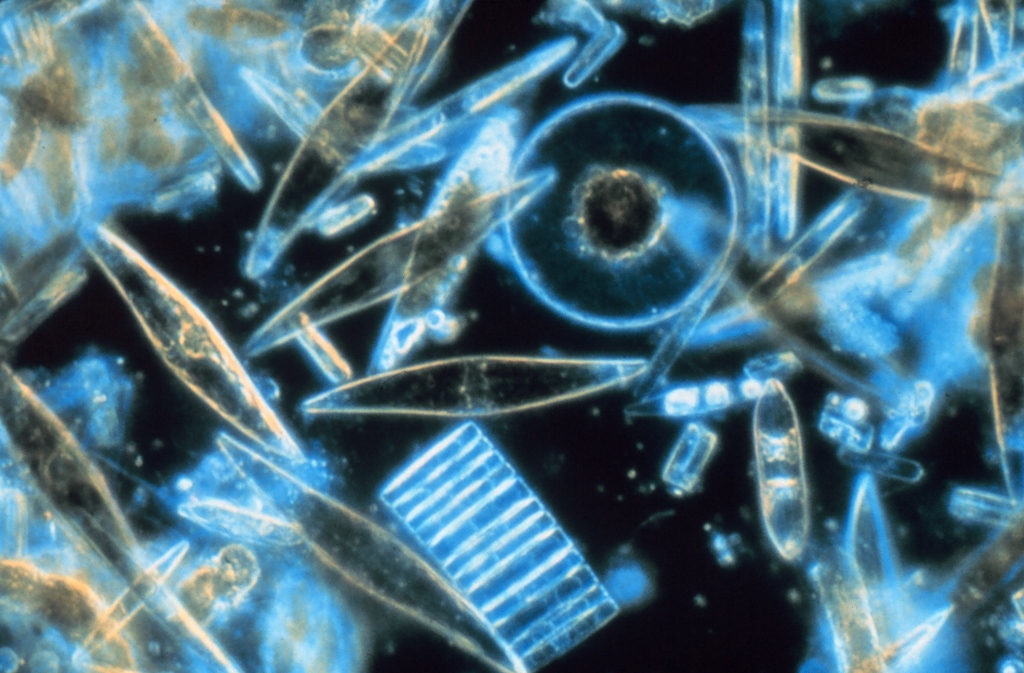
They are almost as numerous and varied as our stars in the night sky above. They assume the shapes of ribbons, fans, zigzags, stars and many other forms we have no words for. These tiny diatoms date stamping the march of time measure between 2 and 200 micrometers wide. By comparison, a single human hair is 50 micrometers across.
Science is like driving down a road at night guided by the headlamps of our car. We can only see a little way ahead on our journey. We are only just beginning to understand that diatoms are one of the foundations of our life on Earth.
Related
Permafrost Could Release its Secrets Soon
Oldest Antarctic Ice Core Drilling Starts Soon
Preview Image: Light Microscopy of Sundry Diatoms in Annual Sea Ice Crystals in Antarctica
Video Share Link: https://youtu.be/7n-0iWM_lWM