We are at a loss to fully understand why Royal Dutch Shell built the floating liquefied natural gas floating vessel Prelude FLNG. Surely, they know by now that liquefied natural gas still adds a vast amount of carbon dioxide to the atmosphere? Just imagine how many wind farms we could have built for the project cost of $12.6 billion. And how much better we might have slept at night knowing we did the right thing.
The Nature of the Giant Gas Machine Prelude FLNG
Royal Dutch Shell was not content with transporting natural gas from beneath the ocean floor to processing plants on land. They equipped the Prelude FLNG with gas liquefaction equipment to reduce the volume, so they could take even more non-renewable resources at a time. The design life is 25 years. Prelude FLNG will be with us for a long time. A dictionary definition of ‘Prelude’ reads ‘an action or event serving as an introduction to something more important’.
Spoken as an engineering feat, the giant double-hull vessel is impressive by any standards. The length is 1,600 feet, and the width 242 feet. The dead weight of the raw steel was 260,000 tons. The vessel, launched in 2017 displaces more water than five Nimitz-class aircraft carriers. The mooring above the sea floor turret comprises 16 driven steel piles each 180 feet long by 18 feet in diameter.
We Ask, How Safe and How Wise Is This Technology?
If we were to ask the Prelude FLNG operator how safe the vessel is, they might reply, “we have all the necessary safeguards in place” and believe it too. But then, so did the operators at the Chernobyl and Fukushima Daiichi nuclear power stations. And they paid for their overconfidence with their lives.
Those disasters still affect the lives of millions of citizens. Therefore we have a right to ask. The Prelude FLNG vessel pumps 13.2 million gallons of seawater every hour to cool and liquefy the raw product. What would happen, we wonder, if something went wrong with the finished product stored in tanks equivalent to 175 olympic-size swimming pools. It won’t of course, because Royal Dutch Shell has done its homework, and covered all its bases.
Related:
The Days of the Life of Fossil Fuels are Numbered
Batteries and Solar Beat Gas in Arizona
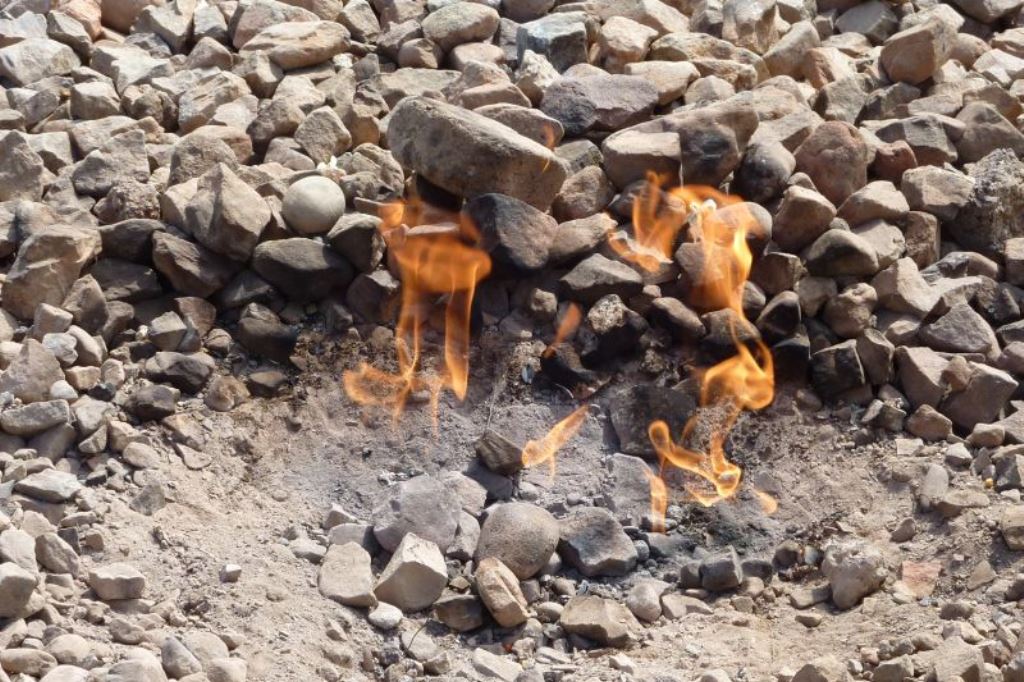
Preview Image: Natural Gas Coming Out of the Ground in Taiwan
Video Share Link: https://youtu.be/4_nUYom3TR8