Most of America’s energy storage is in water. Although wind and solar are catching up because hydro dams and generators take considerably longer to construct. America’s first purpose-built energy-storage reservoir, Candlewood Lake began generating electricity in 1928. Others followed, including the iconic Hoover Dam in 1936. Today we review four recent innovations for energy storage in water that smooths demand peaks in less time to construct.
Four Faster Methods for Energy Storage in Water
The ‘Stensea’ pilot project in Germany is researching sea-bed facilities for energy storage in water. Engineers have lowered a concrete sphere to the ocean floor that generates energy as water flows in. Then it uses the energy to pump it out again. A larger, 5-megawatt, 20-megawatt-hour full-scale system has reached the design stage.
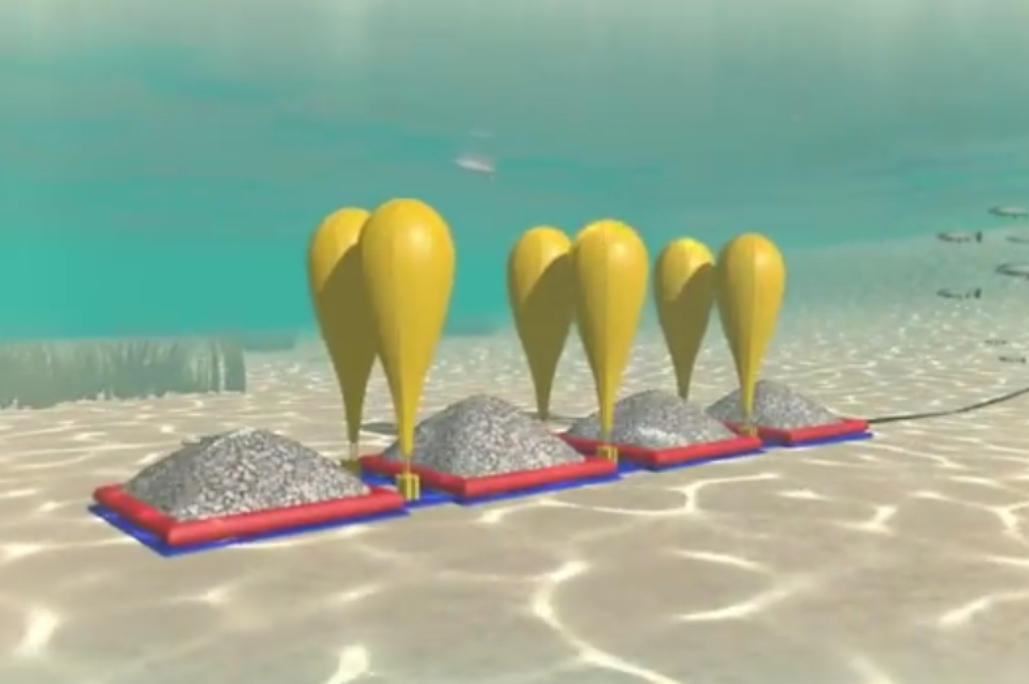
Hydrostar has taken a different approach in Canada, with large balloon-like bags weighted to hold them in position. It fills them with compressed air from the shore when demand is low. And then releases it to drive turbines at peak periods. The pilot project produces 660 kilowatts, although capacity is a secret. Hydrostar is planning to use underground sea caverns for a 2-MW, 7-MWh facility.

DNV GL is constructing ring levees off the Dutch coast, to create a lake similar to a hydro power dam. The sea will fill the lake with seawater when electricity is cheap, and then release the energy storage using water during high demand periods by flowing back.
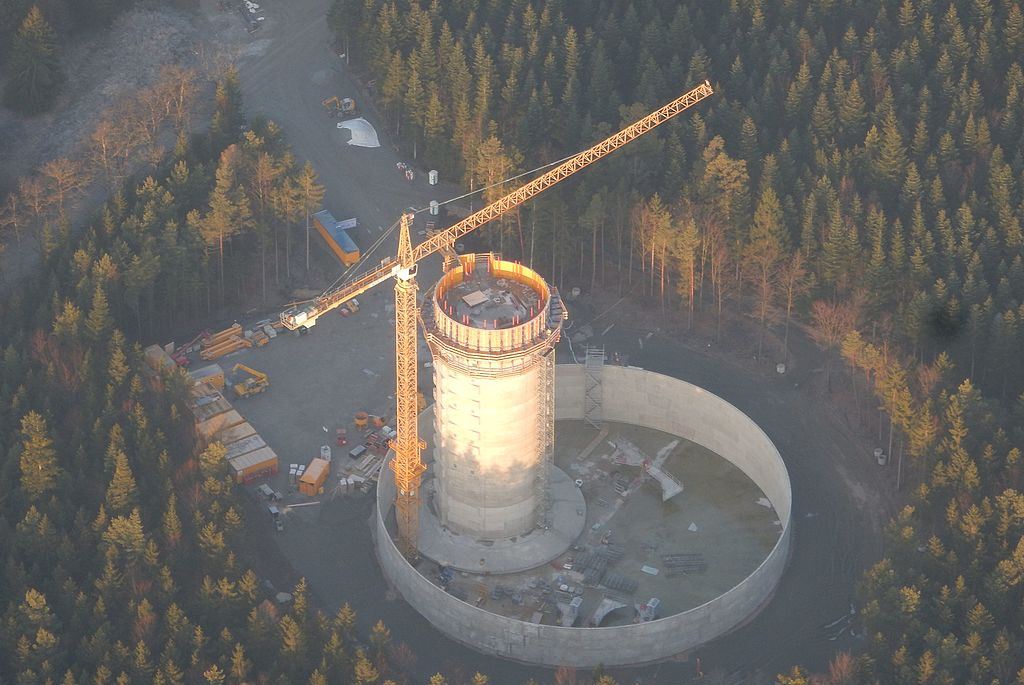
The Naturspeicher project in Germany in conjunction with Max Bögl, positions wind turbines atop water storage reservoirs on hilltops. This raises the blades by a further 40 meters. The design uses the wind energy to fill the reservoirs. Then it releases the water through a turbine to a lake to generate electricity to help meet high demand.
Are These Schemes Replacements for Lithium Batteries?
Citibank suggested the cost of power from pumped hydroelectric storage was about 5% of the cost of grid-scale battery-stored electricity in 2015. However the problem to date has been the shortage of geological opportunities, while the prices of lithium batteries fall.
Taking built technology to the environment as opposed to damming valleys and canyons could turn out a game changer for optimizing energy storage in water.
Related
Major Increase in Production of Hydropower Expected this Decade
What is pumped-storage hydroelectricity?
Preview Image: Naturstromspeicher Wing Turbine Base