Facebook already has two billion users, or a quarter of the planet’s population. But this is insufficient to dent the ambition of a social medium dreamed up by two students in a university dorm. The limitation has been inadequate internet access in underdeveloped regions. We bring news that Facebook uses batteries to bring the service to the people. However, this is still in an experimental phase.
Facebook Uses Batteries to Power Unmanned Drones
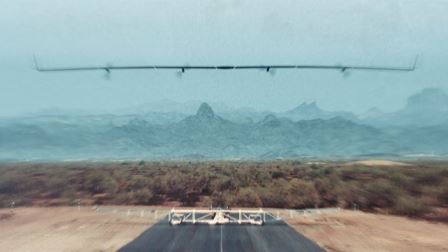
While Google is experimenting with balloons in New Zealand, Facebook is following in the footsteps of Solar Impulse. The graceful, pilot-less wide-winged electric airplane navigated the world on solar power stored in batteries in 2016. Facebook completed the first successful flight of its giant Aquila sun bird on July 21, 2016. Now the BBC has revealed a second, longer flight.

The Challenges that Facebook’s Aquila Faces
Aquila, meaning eagle in Latin, needs sufficient solar power to keep its propellers, communications payload, avionics, heaters and lighting systems running around the clock. Accordingly, it collects this in the daytime, and then stores the surplus in batteries for the night. Thanks to innovative efficiencies, this amounts to 5,000 watts of power equivalent to three hairdryers.
Approximately half the vehicle weight comes from storage batteries. Reliable sources confirm that Facebook uses batteries from Tesla firewall technology because they provide a lightweight, autonomous, and safe storage solution. Despite this, and Aquila having a wingspan wider than a Boeing 737, it weighs about the same as a grand piano.
Aquila Not An Independent Drone…Yet
Facebook’s graceful bird is mostly self-steering, although it does need a tranche of engineers and technicians to oversee takeoffs, landings, and tricky weather. Temperatures vary at low and high altitudes too, presenting further challenges for a vehicle traveling at 80 mph to conserve energy.
We are delighted at this initiative to take Facebook to the people. And especially to share news that Facebook uses batteries for this. Moreover this really seems the only proven way to achieve the goal of flying high above the earth on solar power.
Let us know your thoughts on this new mission by Facebook in the comments below!
Related
Batteries in Space: Hubble Power
Preview Image: Aquila
Video Share Link: https://youtu.be/gbkTh_s-AL0