We know surprisingly little about Giuseppe Zamboni, who lived from 1776 to 1846, and was a priest cum physicist. He resided in northeastern Italy, and became head of physics at the local college shortly after he completed religious studies. So it seems academic boundaries were blurry back then. However, we are more interested in his dry pile battery that powered a perpetual clock, or so they said.
The Power Behind the Dry Zamboni Pile
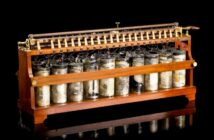
Giuseppe Zamboni built a dry pile battery from alternating discs of manganese, zinc, and paper. However, these were actually three-quarter-inch-diameter paper discs, with zinc foil coating on one side and manganese dioxide coating on the other. The moisture inherent in the paper acted as electrolyte, permitting a chemical reaction between the zinc and manganese dioxide.
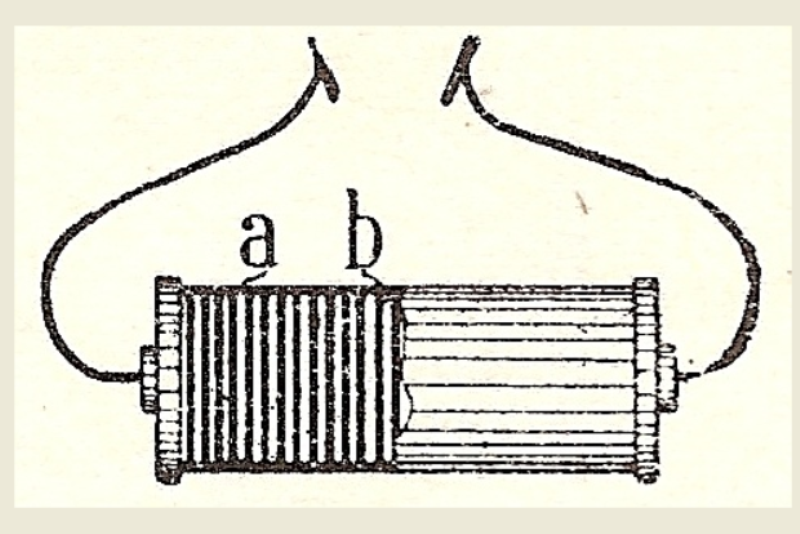
Giuseppe Zamboni assembled his discs in piles of several thousand each, according to Wikipedia. He must have been a patient man, and there is no evidence he collaborated with Volta to conceive this. He kept his piles tidy by stacking them in glass tubes. Although he also threaded them between glass rods with wooden end plates.
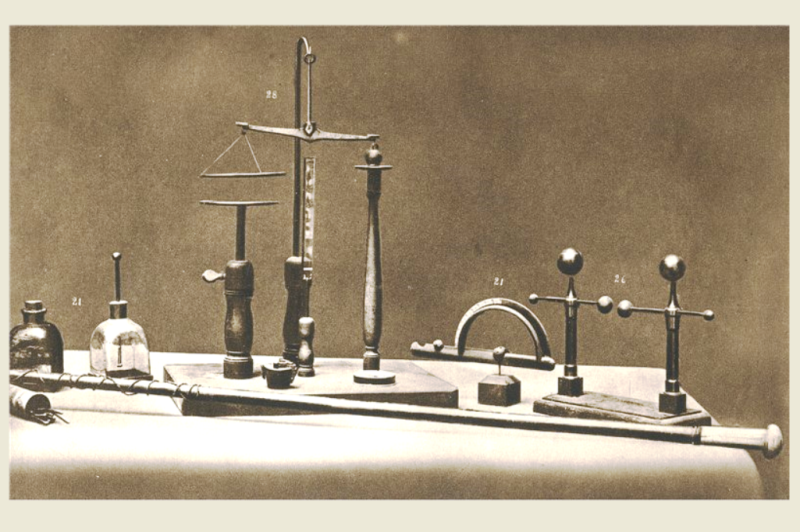
The intrepid priest-cum-scientist tested his device by compressing the piles of discs to generate electromotive forces. Then he confirmed the energy by using an electroscope. This was an early scientific instrument, that detected electric charges from electrostatic force on bodies.
Practical Uses Including Zamboni’s Perpetual Clock
Wikipedia says versions of the Zamboni Pile were in use as late as the 1980’s. They were apparently useful for accelerating voltages for image intensifier tubes. Although nowadays these arrive in transistorized inverter circuits powered by low-voltage batteries.
Giuseppe Zamboni discovered a practical use for his invention centuries earlier. He found he could create oscillating movements, by suspending a light brass ball between the terminals of his dry pile battery. This evolved into an electrostatic perpetual clock. Well perpetual at least until the ‘battery’ ran flat!

More Information:
Gaston Plante’s Remarkable Lead Battery