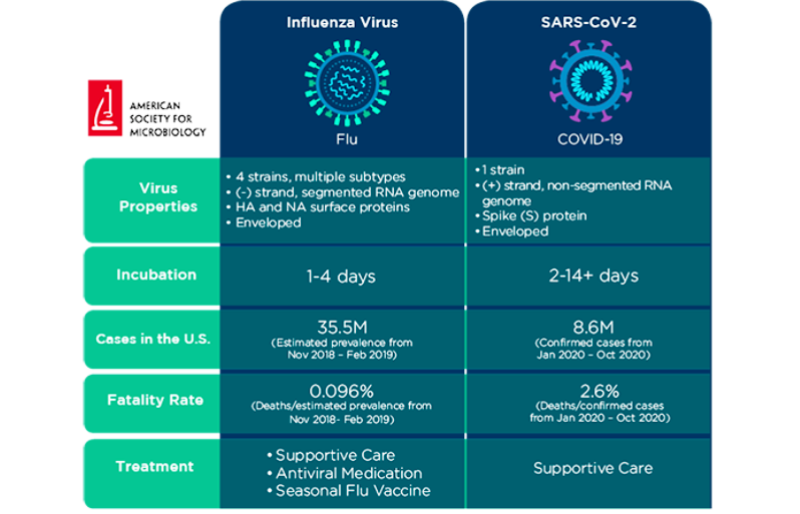
There’s been a marked reduction in influenza and colds during the pandemic. This may be down to masking, distancing, and less socializing. As vaccinated people emerge from those shelters, their likelihood of catching colds and influenza increases. There’s also the off-chance of a mostly-mild dose of the coronavirus if we are vaccinated, in which case we need to avoid spreading it. We compare COVID-19 and influenza symptoms and infectiousness, and discover there’s an overlap.
COVID-19 and Influenza Share Symptoms
Both are contagious respiratory diseases. But COVID-19 spreads more easily than influenza, according to Centers for Disease Control CDC. However, COVID-19 can take more time to show, cause more serious illness, and stay contagious longer.
Since the symptoms of COVID-19 and influenza overlap, the only way to be sure which one we have is to take a test. Moreover, it’s possible to have both diseases at the same time.
Overlapping Symptoms That May Occur
There are are a variety of signs suggesting we may have a respiratory infection. Of course, nobody has all of them, and this makes diagnosis more difficult. Here they are …
Fever or feeling feverish / having chills
Cough
Shortness of breath or difficulty breathing
Fatigue (tiredness)
Sore throat
Runny or stuffy nose
Muscle pain or body aches
Headache
Vomiting and diarrhea
Change in or loss of taste or smell*
*More frequent with COVID
How Long COVID-19 and Influenza Take to Become Active
SYMPTOM TIMING
One or more days can pass before we start showing symptoms, although COVID-19 can take longer. Influenza generally shows between 1 and 4 days after infection. But COVID-19 symptoms can appear 2 to 14 days after infection.
INFECTIOUSNESS
Both COVID-19 and Influenza can infect other people for at least a day before symptoms show. However COVID-19 can be more contagious for longer. Influenza is most infectious for the first 4 days, but remains infectious for 7.
However COVID-19 can remain infectious for at least 10 days, with or without symptoms. Moreover, people with severe disease or weakened immune systems can be contagious for 20 days or longer.
HIGH RISK CASES
Older adults, people with some underlying conditions, and pregnant people are at higher risk of severe symptoms with both diseases. However, influenza can affect children under 5 more seriously. Whereas adults over 60 are more at risk from COVID-19.
Recent
Vaccine Protection Rates What They Mean
No Vaccine Will Offer Indefinite Protection
Preview Image: COVID-19 and the Flu