What goes up must come down because of the law gravity, as our teachers told us while we were kids. When the Canadarm2 robotic crane released a pallet of used international space station batteries (ISS) into space in March 2021, their destiny was written, and it was not in the stars. They would re-enter our atmosphere and return to earth somewhere uncertain.
The Batteries On International Space Station
The first round of international space station batteries used nickel-hydrogen technology. These had a potential service life of fifteen years, 20,000 charge cycles, 85% energy efficiency, and 100% faradaic efficiency. Eventually all good things came to an end, and NASA had to replace them between 2017 and 2021.
Batteries are essential on the ISS station. That’s because the spacecraft loses sight of the sun during its orbit, and cannot generate solar energy during these intervals. So the batteries recharge during sunlight from the solar panels, and discharge when ISS night returns.
Work began to replace the nickel-hydrogen batteries with lithium-ion alternatives in 2017. The work was complex, because it required space walks and the number and size of the batteries were different. The project finally completed in February 2021, leaving one outstanding question:

What to Do With the Old Nickel-Hydrogen Batteries
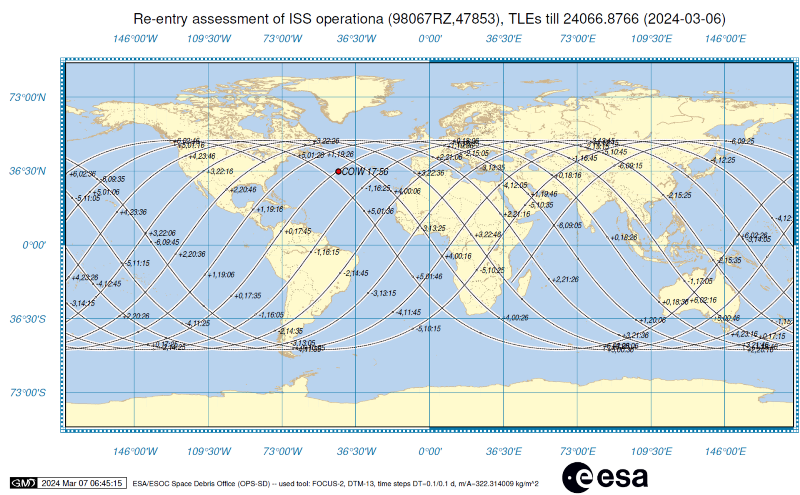
There are no vacant spaces for old batteries on the ISS space station. NASA had few choices really, but to jettison them in space, adding to the pollution already out there. European Space Agency (ESA) published an update on March 7, 2024 that we link to below.
The agency advises that the pallet with nine old nickel-hydrogen batteries will soon start descending rapidly. It’s quite a big parcel actually, weighing some 2.2 metric tons. Most of the contents will incinerate from the heat of air friction, and disintegrate. However, some pieces may reach Earth’s surface, with a ‘very low casualty risk’.
More Information
International Space Station Batteries Delayed
Dramatic Spacewalk to Change ISS Batteries