Johnson & Johnson announced a large spike in antibodies among clinical trial participants on August 25, 2021. They had received their Janssen boosters six to eight months after the first dose. This was a bonus, given the manufacturer previously announced neutralizing antibody responses were strong and stable eight months after immunization. But what should we make of this, now we know Johnson vaccine booster shots are effective?
The Johnson Trials Reinforce the Evidence for Boosters
U.S. health officials previously recommended boosters eight months after full Pfizer and Moderna vaccinations. However, they pended their decision on the Johnson vaccine, citing a lack of data according to Live Science. The company press release confirms they closed the data gap ‘in anticipation of the potential need for boosters’.
The evidence Johnson vaccine booster shots are effective is quite dramatic. That’s because the press release states the boosters ‘Generated a rapid and robust increase in spike-binding antibodies.
‘This was nine-fold higher than 28 days after the primary single-dose vaccination,’ they said. ‘Significant increases in binding antibody responses were observed in participants between ages 18 and 55. And in those 65 years and older who received a lower booster dose.’
Confidence Levels for Johnson Vaccine Booster Shot Effectiveness
We have not yet seen the clinical trial report, although we understand it is with pre-print database medRxiv. Live Science says the company based its finding on ‘two small clinical trials’ conducted in the U.S. and in Europe.
We don’t yet know whether participants were sufficiently numerous and random to make the results statistically reliable. However, we do understand the Phase 1/2a clinical trials enjoyed part funding by U.S. Department of Health and Human Services. We should therefore be able to safely assume they met generally accepted standards.
Recent
Immunity Continues After Vaccinations Wane
Vaccinated People May Not Offer Protection
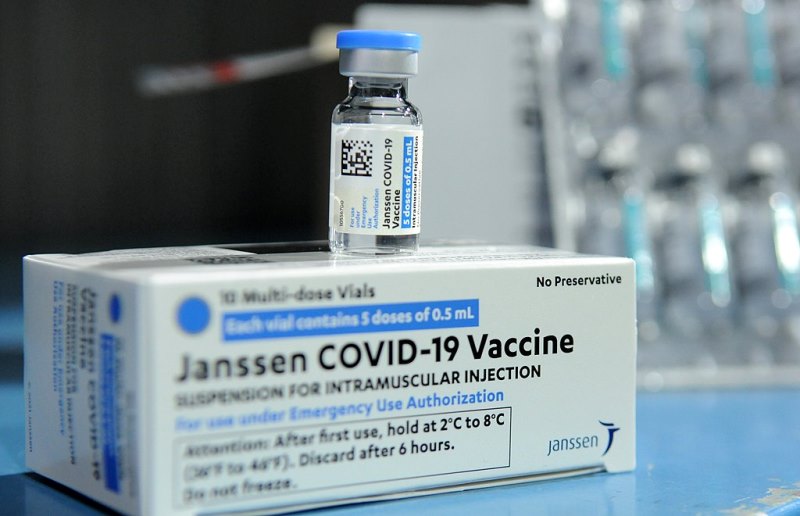
Preview Image: The Janssen Vaccine (2021)