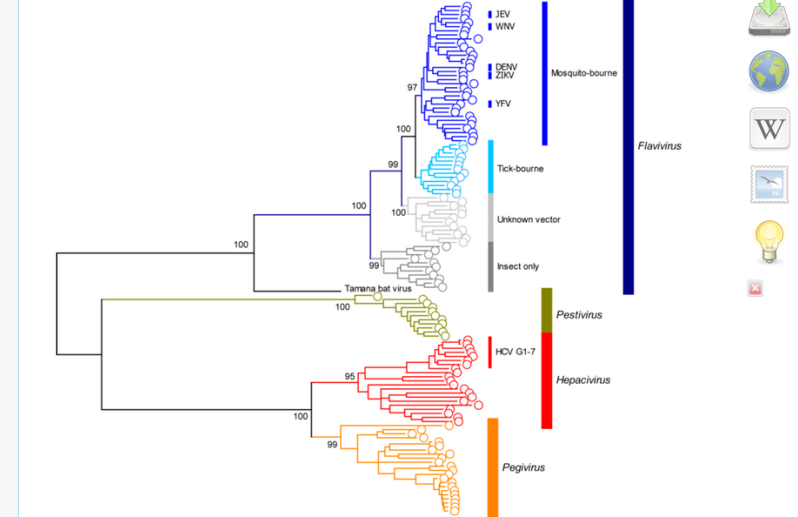
U.S. Institutes of Communicable Diseases says South Africa is monitoring a new lineage of Sars-Cov-2 virus causing COVID-19. A lineage represents a genetically distinct virus population with a common ancestor. However, we don’t yet know how dangerous this new lineage of SARS-CoV-2 is in South Africa. That’s because these are early days, but the Network for Genomics Surveillance has matters in hand.
How the New C.1.2. Lineage Came About
Viruses mutate on an ongoing basis, potentially each time they settle in a new host. These variances are the result of errors in the self-replicating process. South Africa’s high Delta infection rate thus makes it a fertile ground for new variants and lineages.
But South Africa is also one of the first countries to introduce systematic and coordinated genomic surveillance. Hence it is well-positioned to identify, and track the spread of the new lineage of SARS-CoV-2 virus through extensive testing.
The Network scientists describe their process as ‘very much like a game where you spot the difference between pictures. A small number of differences indicates a variant. A new lineage on the other hand has many more.’
The Virulence of The New Lineage of SARS-CoV-2
The potential risk of a new lineage depends on its ability to spread, and the severity of infections. South African scientists report ‘This [C.1.2.] lineage possesses mutations within the genome [at the spike protein]that have not been seen in other SARS-CoV-2 variants’. It first appeared in May 2021, yet still ‘occurs at relatively low frequency … with small increases’.
The Network for Genomics Surveillance is researching how well vaccine antibodies neutralize the virus, and how rapidly it multiplies in cell cultures in laboratories. There’s a small, but real possibility of a variant or a lineage being able to resist all known vaccines. Our hope therefore lies in controlling the virulence of its spread.
Recent
COVID Breakthrough Infections An Update
Tackling Vaccine Hesitancy in South Africa
Preview Image: The Evolution of a Typical Virus