

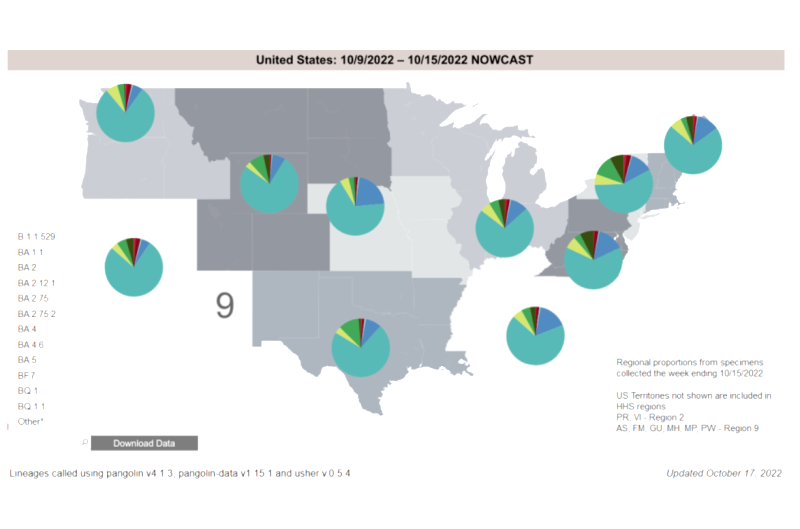
Many COVID-19 variants have come and gone during the pandemic. Some have stayed longer in the viral chess game. We are currently in the age of the Omicron variant, which has been remarkably prolific. Now there are clear signs the latest Omicron BQ.1 and BQ.1.1 sub variants are settling in too. In fact, there’s already some evidence they could influence our lifestyle this winter.
Omicron BQ.1 and BQ.1.1 Are Already Making Waves
U.S. Centers for Disease Control (CDC) announced each sub variant shared 5.7% of cases in U.S. during the week ended October 15, 2022. Jamie Ducharme writing for Time.Com suggests these new-comers ‘are quickly gaining ground’ especially as parent BQ.1 only appeared in September 2022. Indeed, the pair approached 20% of infections in New York, and New Jersey during the period under review.
Dr. Eric Topol is founder of Scripps Research Translational Institute, and a keen observer of COVID-19 research. He believes BQ1.1 is of greater concern. That’s because BQ.1.1 is ‘just riddled with troublesome mutations’ that could ‘pose a threat to our immune system response,’ according to Jamie Ducharme.
How Well Will Our Vaccines Cope With These Newcomers?
Sub variants Omicron BQ.1 and BQ.1.1 link across to BA.5, which means they should be within range of the new Omicron-specific boosters. Therefore, White House medical adviser Dr. Anthony Fauci believes the new shots should ‘almost certainly provide some cross protection,’ as relayed from CBS News.
However, and here’s the possible catch, we are viewing the future through an imperfect lens. Dr. Eric Topol of Scripps Research Translational Institute suggests we should “arm up against any of these new variants. Just keep your immune system as primed and ready as possible,” he advises. Less than 10% of Americans appear to have done so.
Breaking News
6 Ways to Stay Safe from COVID This Winter
Cancer Could Benefit from COVID-19 Research


