Have we reached the stage where we need to start thinking of preparing for lithium-ion fires? They certainly seem to be popping up on news channels more frequently. It might make sense to ask ourselves ‘what if there’s a problem’, each time we leave a lithium-ion battery (or device) charging on its own.
The Kamloops Lithium-Ion Battery Fire
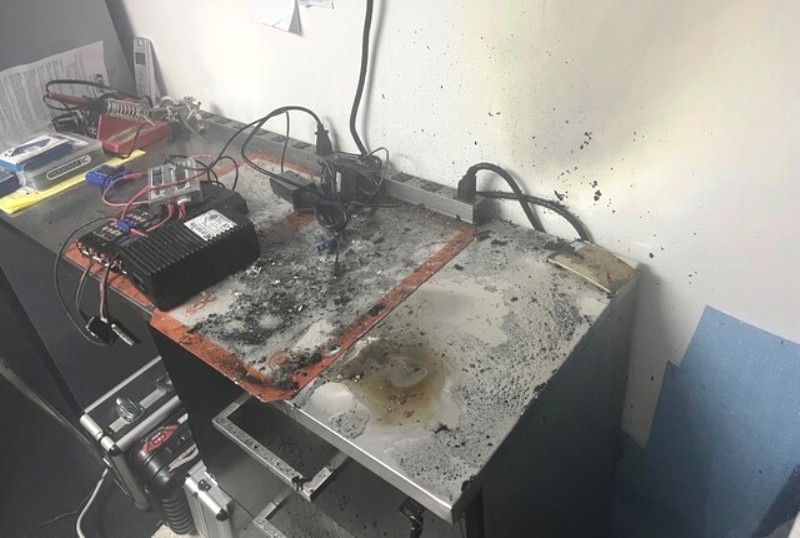
Kamloops is a Canadian city in British Columbia, where the North and South Thompson Rivers meet. A fellow there nearly came home to a disaster, when he left his radio-controlled airplane charging in the basement.
He could probably count his lucky stars that somebody else was in the house when the lithium-ion battery caught fire. The first principle of preparing for lithium-ion fires is not leaving batteries charging on their own.
Kamloops Fire Rescue life safety coordinator Josh Cowen, says the residents were ‘extremely lucky not to lose their home’. Fortunately, the radio-controlled airplane was charging on a steel work bench at the time.
We’re not sure whether the airplane owner deliberately placed the model airplane on the non-flammable surface. The second principle of preparing for lithium-ion fires, is providing a suitable surface for batteries to catch fire.
Preparing by Taking Sensible Precautions
Castanet Kamloops news channel confirms that the airplane battery and charger were both from the same reputable manufacturer. And that moreover, the battery had a safety mechanism to prevent overcharging too.
So this seems like a lithium-ion battery fire that should not have happened, but yet it did. The greatest concern is that nobody was present in the basement to monitor the battery temperature at the time.
We understand from the news report that lithium-ion batteries are the third most frequent source of fires in Kamloops, after cooking and smoking materials. They recommend charging lithium batteries on hard surfaces away from flammable materials.
We think the single most important step in preparing for lithium-ion battery fires, is to be personally present when charging batteries. “When they do fail, they’re extremely violent,” observes the Fire Rescue spokesperson.
More Information
Vape Fire Closes Glasgow Station