Proton exchange membrane fuel cells – also known as polymer-electrolyte membrane – conduct hydrogen ions / protons, but not electrons. They could become the energy storage medium of the future, replacing even ubiquitous lithium-ion cells. But first battery scientists need to overcome a number of shortcomings. These include falling short of lithium batteries in terms of energy storage per unit of mass.
A New Proton Exchange Battery from RMIT
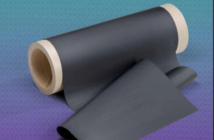
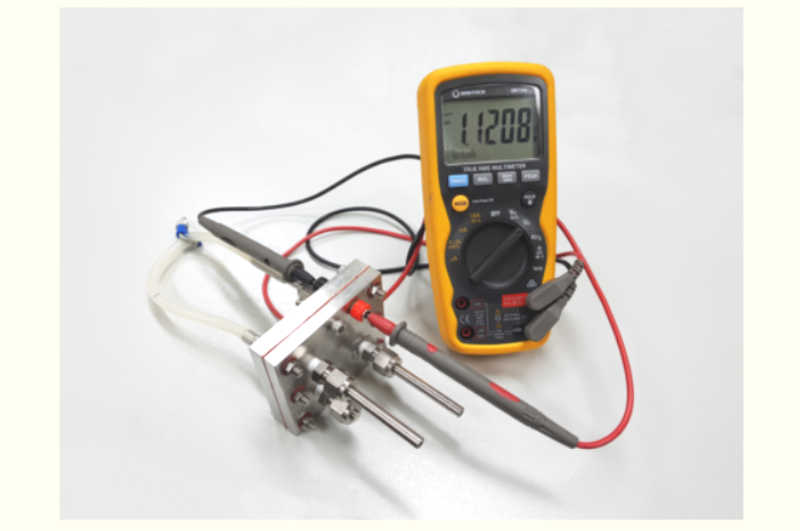
Researchers at RMIT University in Australia have developed a more powerful proton exchange battery that could revolutionize the industry. Their working prototype uses a carbon electrode as a hydrogen store, and twins this with a reversible fuel cell to produce electricity.
The carbon in the electrode bonds with protons generated by splitting water into oxygen and hydrogen during charging, with the help of electrons from the power supply. The protons are released again, and pass back through the reversible fuel cell, to form water with oxygen from air to generate power. Unlike fossil fuels, the carbon does not burn, or cause emissions in the process.
“It’s the carbon electrode plus protons from water that give the proton battery it’s environmental, energy and potential economic edge,” says lead researcher John Andrews. “Our latest advance is a crucial step towards cheap, sustainable proton batteries that can help meet our future energy needs, without further damaging our already fragile environment,” he adds.
That’s quite a claim for anybody to make. Nonetheless, carbon and hydrogen are universally available, and non-toxic and non-flammable too. The summer of 2023 has made it abundantly clear we need to move fast to bring global warming under control soon.
Future Use of Environmentally Friendly RMIT Battery
The RMIT University press release predicts future applications in household energy storage from solar photovoltaic panels. However, with ‘some scaling up’ their proton exchange battery could also power electric vehicles, and medium-scale utility grid storage, they believe.
“Future work,” Andrews continues, “will now focus on further improving performance and energy density through use of atomically-thin layered carbon-based materials such as graphene.” Their target is a proton battery that is truly competitive with lithium-ion batteries. We shall watch with interest from the sidelines.
More Information
300-Megawatt Organic Flow Battery
Flexible Batteries in Personal Devices