A severe rainstorm with swirling winds can be a traumatic experience, especially for folk living on steep slopes and in low-lying areas. Even if their homes escape serious damage, they still have to clean up the mess afterwards. Rain storms and flooded batteries may not go well together, especially in the case of certain battery chemistries.
Dealing With Flooded Batteries After Storms
The U.S. Federal Emergency Management Agency (FEMA), believes that high-risk items include e-bikes, golf carts, and electric vehicles trapped in flooded garages.
That warning applies to lithium-ion batteries in particular, that can catch fire after they overheat. Lead-acid battery electrolytes cannot burn, because their sulfuric acid is mixed with distilled water.
If the lithium-ion batteries are already overheating or smoking, notify your fire department immediately. If they are still at room temperature, then FEMA suggests the following – but please do take care:
- Disconnect all lithium-ion devices / batteries from their chargers, if they are, or might be water-damaged.
- Remove all suspect batteries and / or devices containing them from buildings to open spaces.
But DO NOT do the above, if batteries or devices are hissing, smoking or releasing gases. Call your local fire department. They will know what to do with batteries flooded by rain storms.
How Serious Are Flooded Lithium-Ion Batteries?
The U.S. Idaho National Laboratory retrieved six electric cars after a hurricane, and parked them in the Nevada Desert. All of these vehicles were covered with mud, dirt, and mildew inside and out.
Water conducts electricity, and can short-circuit a battery. In this instance, the vehicles were damaged by seawater, which conducts electricity much faster than rainwater.
The Idaho engineers dismantled the vehicles parked in the Nevada Desert, to determine the extent of saltwater intrusion. “Some of the main battery packs were partially submerged, and some were fully submerged,” they reported.
“Half the 10 batteries did not show evidence of water in their main compartment; the other half did.” If those battery cases were broken open during the hurricane, then seawater could have flowed in and short-circuited them.
More Information
A Storm-Ready Battery When You Need It
Saltwater and Electric Vehicle Battery Damage
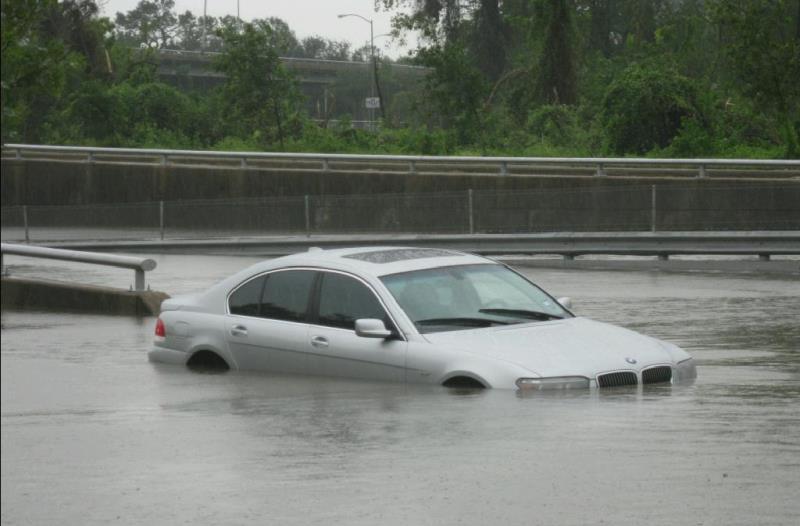
Preview Image: Caught in Flood Water