Aluminum-ion batteries are conceptually similar to the lithium-ion ones we know well. They also have two electrodes separated by liquid electrolyte. However, in this instance their charge carrier is aluminum, not lithium. This active material is the third most abundant element in Earth’s crust. Resolving aluminum-ion dendrites has held back this promising technology until now.
Resolving Dendrites in Aluminum-Ion Batteries
Physics World confirms the great potential of fast-charging aluminum-ion batteries, if we could find a way to manage uneven anode plating. Researchers at University of Queensland, Australia have found that ‘preconditioning’ aluminum-ion anodes could control dendrite formation.
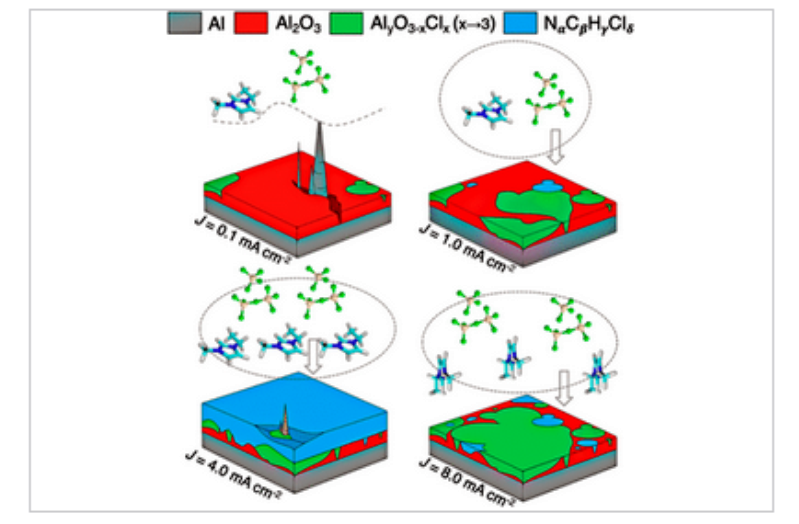
Battery scientists call this plating the solid interphase layer, that forms during the early operating life of an aluminum-ion battery. This layer sometimes fails, allowing ‘tree-like’ dendrites structures to break through.
Once begun, this process continues relentlessly in the absence of a way of resolving aluminum-ion dendrites. Eventually, the ‘trees’ force their way through the separator, forming a short-circuit between the anode the partner cathode .

What the University of Queensland Researchers Discovered
The dendrites issue in aluminum-ion batteries is not a new problem, by any account. In fact, scientists have been searching for a solution for decades. The team at University of Queensland already knew that the root cause lay in imperfections in the solid interphase layer, that allow the dendrites to ‘escape’. But what causes these weak points?
The team at Queensland joined forces with their colleagues at Adelaide University, Australia, and Oak Ridge Laboratory in the United States. Together, they applied their minds to several factors:
- How the aluminum anode interacts with the liquid electrolyte.
- The composition of the aluminum ‘partner’ cathode electrode.
- The current running through the battery while it is operating.
The team decided to recommend further research into different aluminum-alloy chemistries. They also suggested that specific conditioning protocols might produce a more solid electrode interphase, and improve cycling performance.
“Our research demonstrates that, like in lithium-ion batteries, aluminum-ion batteries also need pre-cycling to maximize their lifetime,” the team told Physics World. “This is important knowledge for aluminum-ion battery developers, who are rapidly emerging as start-ups around the world.”
More Information
Modified Aluminum Battery from Georgia Tech
Build an Aluminum Air Battery at Home
Preview Image: Deposits on Aluminum-Ion Anodes