The Worcester Polytechnic Institute (WPI) is one of America’s oldest engineering and technology universities. It began in 1865 as Worcester County Free Institute of Industrial Science. Since then, it has expanded to 14 academic departments with a reputation for high research activity according to Wikipedia. Scientists at WPI’s Department of Mechanical and Materials Engineering played a leading role in developing a strategy for more effective recycling of lithium-ion batteries.
Major Step Forward in Recycling Lithium-Ion Cells
The researchers teamed with Argonne National Laboratory, to develop a method for safer recycling of lithium-ion batteries. Their press release that we link to below, describes this method as scaleable, efficient, and environmentally friendly too.
Their research report that we also link to below, appears on the Science Direct portal for July 2025. This describes an innovative, hydrometallurgical up-cycling approach. This confirms that their method involves extracting spent battery materials using a water-based solution.
This particular approach targets spent, mixed nickel-lean cathodes, that are common in lithium-ion batteries. The WPI approach recovers some 92% of critical nickel, cobalt and manganese metals. This is a distinct improvement over current energy intensive methods.
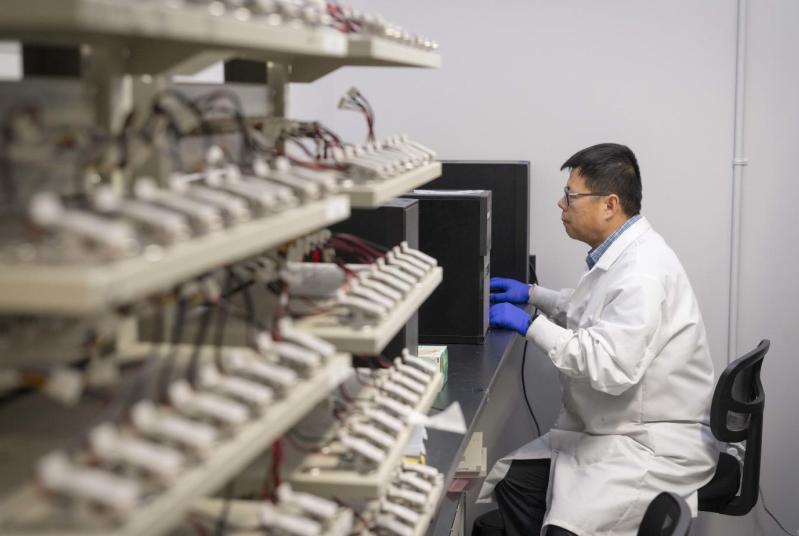
Recycled Cathode Powders Compared to Virgin Metals
The recycled lithium-ion battery cathode materials, compare well with those from first-use metals:
- Recycling using water-based aqueous solution saved 8% energy, and reduced carbon emissions by 14% compared to conventional hydrometallurgy.
- Pouch batteries made with the second-use minerals retained 88% of their capacity after 500 charge cycles, and over 85% capacity after 900 cycles.
“We’ve shown that it’s possible to create high-performance batteries from recycled materials at scale,” observes Prof Yan Wang. “This is essential for building a more sustainable and resilient battery supply chain.”
The research report continues, “the cost model indicates that this up-cycling process can reduce cathode manufacturing expenses by 76.52 %, relative to other recycling and up-cycling methods”.
More Information
Leaching 99% of Lithium From Used Batteries
Purifying Battery Black Mass in Vegetable Oil
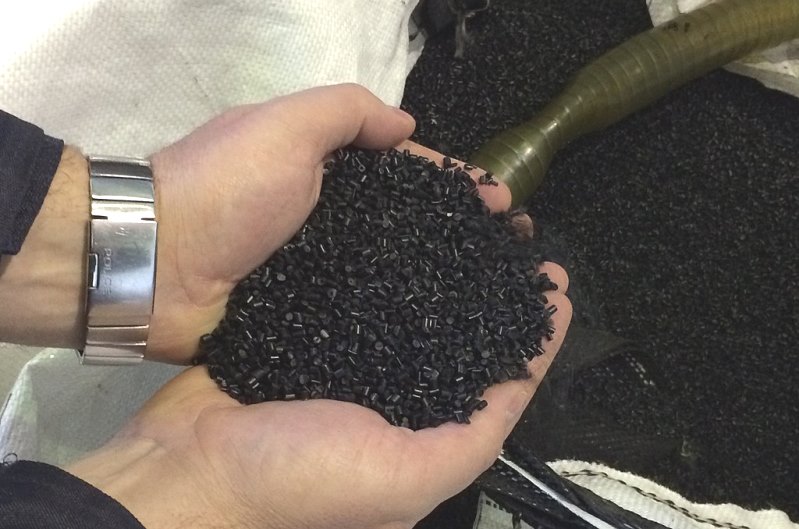
Preview Image: Typical Black Mass Powder