Sodium-sulfur molten-salt chemistry typically uses liquid sodium, and liquid sulfur as electrodes storing energy. This arrangement compares well with lithium-ion battery performance, but only at high temperatures between 300 and 350 °C (575 and 675 °F). Chinese scientists have found a way to build simpler sodium-sulfur batteries that are less expensive.
Impressive Density from Simpler Sodium-Sulfur Batteries
The lead researchers are from Shanghai Jiao Tong University in China. Their design, currently undergoing trials in their laboratory, uses inexpensive materials. Yet, their combination of sulfur, sodium, aluminum, and chlorine-based electrolyte works surprisingly well.
Their prototype delivers more than 2,000 watt-hours per kilogram of weight, calculated in terms of actual battery mass. This achievement compares well with the best lithium-ion chemistry, and is streets ahead of sodium-ion. But why was this not possible previously?
The Problem and How They Solved It
Sodium-sulfur batteries, as a class, produce byproducts that obstruct energy flow to the sulfur, and shorten battery life. The Chinese scientists switched the design so the sulfur electrode transmits the energy instead.
THE MODIFIED DESIGN.
- The prototype battery in the laboratory uses aluminum foil as anode, and pure sulfur as cathode.
- The electrolyte is a novel combination of aluminum chloride, sodium salts, and chlorine.
WHEN THE BATTERY DISCHARGES
- The sulfur at the cathode surrenders electrons, and reacts with the chlorine to form sulfur chlorides.
- The sodium ions ‘capture’ the electrons, and move them to the aluminum foil where they plate themselves.
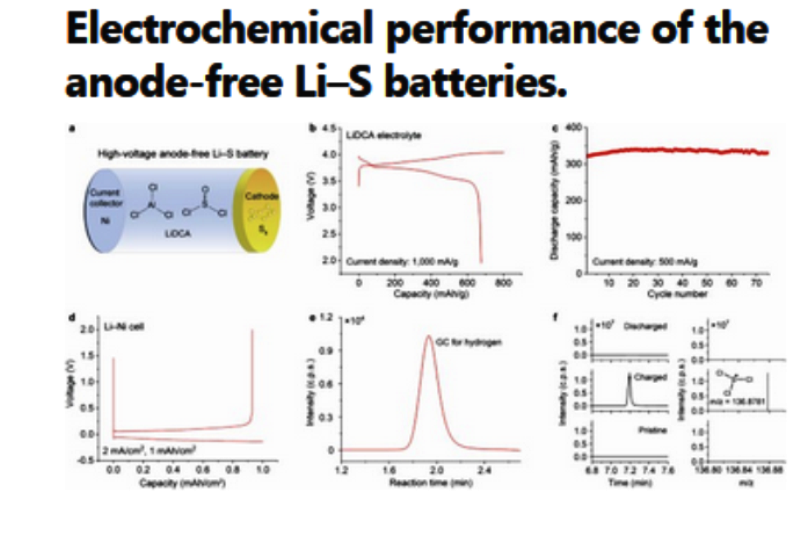
The performance stats are impressive. The experimental battery delivers 1,400 charge-recharge cycles, before losing significant storage capacity. One prototype even retained 95% of its charge after resting for a year
However, that said, we are unlikely to see these batteries in our stores any time soon, even though they should be relatively cheap. There a number of issues the researchers still need to resolve, including a highly corrosive electrolyte.
More Information
Sodium-Sulfur Batteries With Lavender Oil
Sodium Sulfur Flower Power? What Next!
Preview Image: Simpler Sodium-Sulfur Battery