Centers for Disease Control (CDC) published a report warning the coronavirus can be spread in particles in September 2020. We duly wrote it up before they took the notification down saying its publication was premature. This tossed a ripple in the pond, and raised questions among some whether they really knew ‘what is going on’.
The Coronavirus Can Be Spread in Particles But We Can Do Things
Hats off to CDC for having courage to revisit the topic and admit they were right all along. However, this time they added more details to this exceptionally important dynamic which we summarize here:
1… There are two categories of respiratory droplets. Larger, visible ones drop out the air within seconds to minutes, while still close to the source
2… Smaller droplets and particles remain hanging in the air for many minutes to hours, and travel far on air currents
The concentration of these exhaled respiratory droplets in the air decreases as they fall to the ground. Those that remain longer, dilute in concentration as they spread
This appears to be the commonest way the coronavirus can be spread in particles. The other two are physically touching an infected person, and picking it up from a contaminated surface.
However, Long Range Transmission of COVID-19 Is Rare
Centers for Disease Control believes, in terms of available evidence, that long range transmission of smaller droplets and particles is rare. They believe COVID-19, and other respiratory viruses primarily spread within less than six feet.
The risk of efficient airborne spread should be almost non-existent after a few hours. There are however three exceptions:
1… Enclosed spaces, where an infectious person exposes several vulnerable people at the same time, or shortly afterwards.
2… Prolonged exposure to respiratory particles exhaled by infected people while shouting, singing, dancing etc.
3… Inadequate ventilation, or air handling plant allowing an accumulation of suspended small respiratory droplets and particles
The CDC concludes existing strategies to prevent airborne transmission are generally adequate. However, we believe it also makes sense to avoid activities and enclosed spaces that pose higher risks.
Related
Airborne Transmission in Enclosed Settings
COVID-19 Infection Through the Air is Key
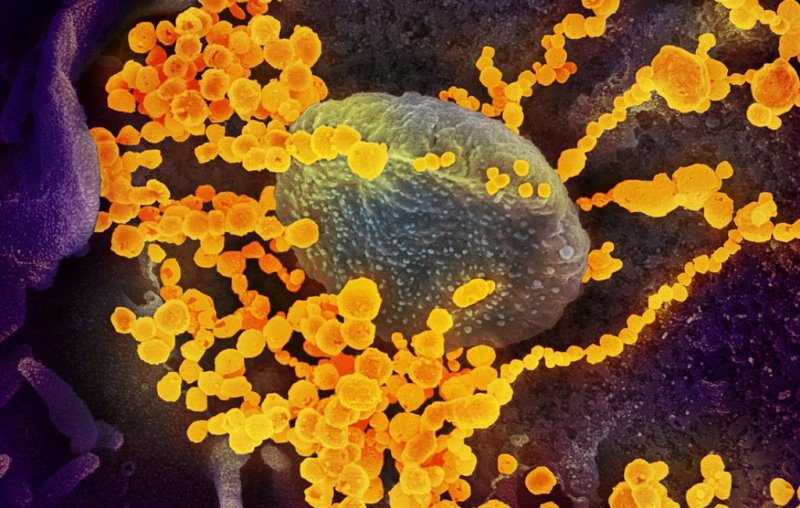
Preview Image: SARS-CoV-2 Active Virions