


Thomas Townsend Brown is a mysterious figure in electrical history. This was because he had wealthy parents, the best education and a powerful imagination but still struggled with his studies. Therefore his parents set up a fully provisioned private laboratory in the family home in Pasadena, California. There, Thomas spent every spare moment experimenting with electricity and gravity. This was despite a Nobel laureate telling him his ideas would never work.
Thomas Townsend Brown Advances into Adulthood
Thomas could never keep a steady job, although he did have some interesting roles. He ended up in the Atlantic Fleet Radar School in Norfolk, Virginia after Pearl Harbor. However he terminated his service in 1942 after asking to resign ‘for the good of the naval service in order to escape trial by General Court Martial’. But there are no further clues to what happened other than a terse ‘no comment’ in the official record.
A Modern ‘Gravitator’ in Action
Despite this, Thomas Townsend Brown continued his work on anti-gravity devices while helping found the National Investigation Committee on Aerial Phenomena. He investigated UFO’s but left under a cloud for allegedly using Committee funds to finance his own research. However, the ‘gravitator’ he patented in 1928 continued to remain his obsession. He claimed this produced a mysterious force that interacted with the pull of gravity to produce movement.
A Magnificent Obsession: A Gravitator that Possibly Never Really Was
Later, our ‘mystery man’ followed up with claims his electromagnetism could potentially propel the ocean liners of the future.” Or even “fantastic ‘space cars to Mars.” After World War II he promoted his invention as a motive power for aircraft and spaceships.
In the 1950’s he produced designs for metal plates and discs carrying charges of up to 200,000 volts. A physicist who observed a demonstration remarked the energy was the well-known phenomenon called the electric gentle wind. “This is not anti-gravity,” he said. “I’m afraid these gentlemen played hooky from their high school physics classes….”
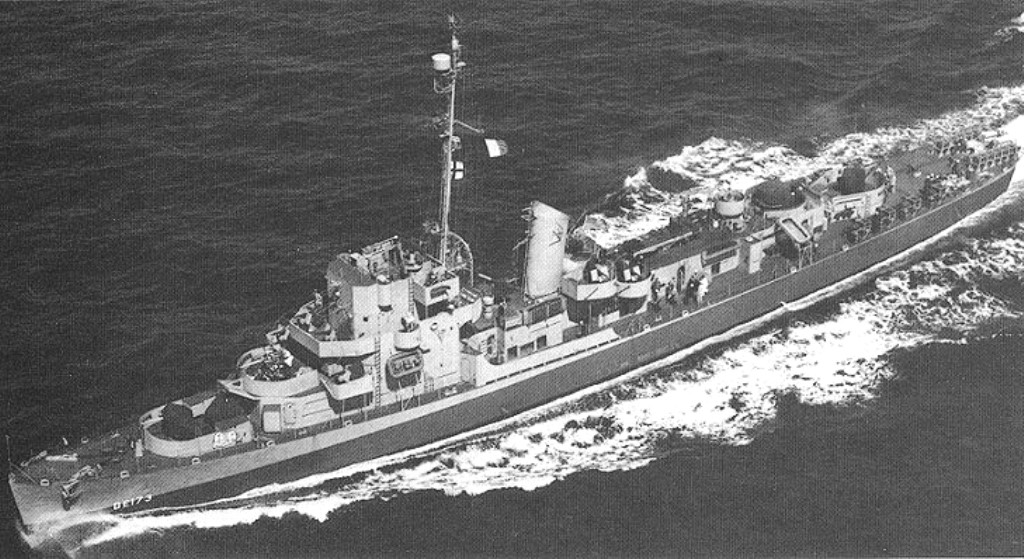
In 1979 the author Charles Berlitz and the ufologist William L. Moore published The Philadelphia Experiment: Project Invisibility. Their book claimed to be a factual account of how a United States Navy experiment accidentally teleported the warship USS Eldridge. Chapter 10 of the book claimed Thomas Townsend Brown assisted with the experiment and that UFO’s used his propulsion method. However, the book was most likely a hoax.
That said, there is general consensus Thomas Townsend Brown may have been the first person to accidentally demonstrate the ‘ionic wind’. This could have been the same motive force Ethan Krauss and the Massachusetts Institute of Technology applied when powering their flying devices. It may even have powered UFO’s, in his indisputably vivid imagination.
Related
Ionocraft History Early Work by Ethan Krauss
Electro Hydrodynamics Powers Ionocraft Lifter
Preview Image: https://youtu.be/0ftbobwkf2Y
Video Share Link: Thomas Townsend Brown Patent for ‘Flying Apparatus’

1 Comment
I’m assuming the potentiometer is powered with A/C which may explain the electomagnetic field is making the objects bounce that are put into the levitation device? It’s amazing technology that need’s to be expanded on with intensive research and testing of prototype’s.