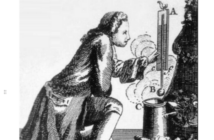
Leclanche cell is a primary cell, handy for sporadic use, with positive anode of zinc encompassed by a mixture of manganese dioxide and powdered carbon in a pot, which is porous. The pot and the negative zinc terminal remained in a container holding ammonium chloride solution. The electromotive force (emf) is nearly 1 -4 volt.

Going back to its history, the Leclanche cell was invented by the French engineer Georges Leclanche in 1866. Leclanche’s battery, additionally called a zinc-carbon battery, made use of an alternate type of cell than its antecedents. Rather than lead, the French engineer utilized zinc and a carbon-manganese dioxide mixture for his terminals. He additionally made use of ammonium chloride instead of the sulfuric acid that had been used as the preferred electrolyte. The changes he made to his battery made the cell less dangerous and lighter than the most commonly used Plante model.
Types of Leclanche’s cell include:
a) zinc (Carbon cathode)
b) zinc chloride (Ammonium chloride electrolyte reinstated by zinc chloride)
c) alkaline manganese (Ammonium chloride terminal displaced by potassium hydroxide)
How does it work?
The process which generates power in a Leclanché cell starts when zinc particles on the surface of the anode oxidize, i.e. when zinc atoms surrender their valence electrons to end up becoming the positively charged particles. The zinc particles move far from the anode while leaving their electrons on its surface that makes the anode more negatively charged than the cathode. At the point when the cell is associated in an outer electrical circuit, the excess electrons on the zinc anode gush through the circuit to the cathode made up of carbon. This flow of electrons frames the electric current.

After going through the entire circuit, when electrons enter the carbon rod, which is the cathode, they join together with water and MNO2 (Manganese Dioxide) that further reacts with each other to produce negatively charged hydroxide ions and manganese oxide(Mn2O3). Whole of this process is accompanied by secondary reaction, wherein the negative hydroxide ions react with positive ammonium ions in the electrolyte of ammonium chloride to produce molecules of water and ammonia.
Practical Use
The Leclanche cell was utilized widely for telegraphy, electric bell and signaling work; and for work where intermittent and low current was needed. The battery cell by Georges Leclanche proved out to be extremely advantageous in the early years of the telephones.
See also: