Engineers at University of California, San Diego developed a new electrolyte performing well at freezing cold, and scorching hot temperatures. Moreover, they say it enables a wider temperature range for lithium sulfur batteries too. If this proves commercially practical, then it could have a significant impact on electric vehicle driving range.
Lithium Sulfur Batteries’ Wider Temperature Range
The San Diego engineers developed a new electrolyte that is both versatile, and robust throughout a wide temperature range. Moreover, it also works well with high energy anodes and cathodes too.
The special electrolyte is a liquid solution of dibutyl-ether, mixed with a lithium salt. Dibutyl-ether binds weekly to lithium ions. In other words, the electrolyte molecules can easily let go of lithium ions as the battery runs.
Dibutyl-ether can also withstand high temperatures, because it stays liquid with a boiling point of 141 C / 286 F. The prototype batteries recorded the following test results:
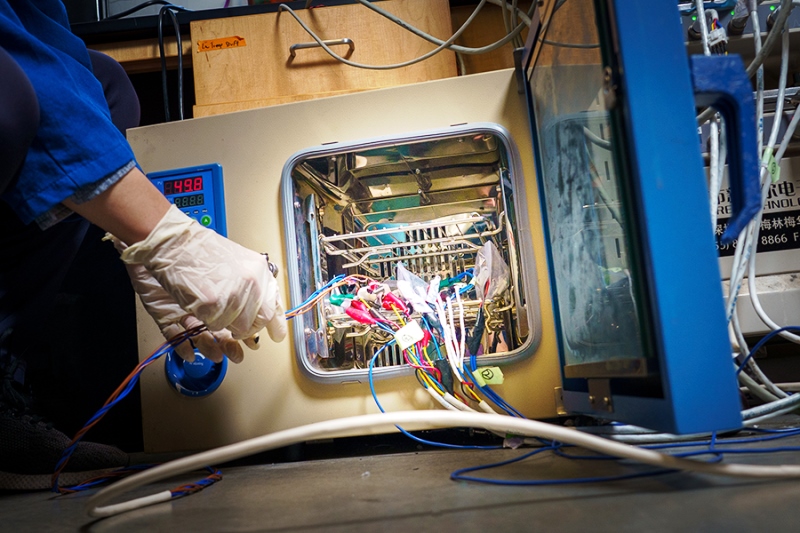
1… The batteries retained 87.5% and 115.9% of their energy capacity at -40 and 50 C (-40 and 122 F), respectively.
2… They also had high coulombic efficiencies of 98.2% and 98.7% at those temperatures, respectively.
3… This means the batteries can undergo more charge and discharge cycles before they stop working. In other words they last longer.
Why This Matters in the Battery Industry
Temperature-tolerant batteries could allow electric vehicles to travel farther in cold countries before needing recharging. But they could achieve the same thing in warm countries too, without expensive battery cooling systems. Therefore this discovery could result in more people switching to electric cars sooner.
It also has the added advantage of bringing lithium-sulfur batteries more within reach. These should be a less expensive alternative to lithium-ion. The Dan Diego engineers will upgrade their prototype to work at even higher temperatures, and with further extended cycle life.
Breaking News
Are Bio Batteries a Viable Alternative Or Not?
Rules for Shipping Used Lithium-Ion Batteries