A sense of quiet satisfaction from driving a battery-powered vehicle can dim our senses regarding the origin of the materials. Sure, we know there’s child labor involved in mining cobalt somewhere in Africa, but we tend to assume someone else is doing something about that. Deep sea mining for battery minerals is none of our business either so why should we worry about the desecration of the seabed?
10 Million Years Gone in a Flash with Deep Sea Mining
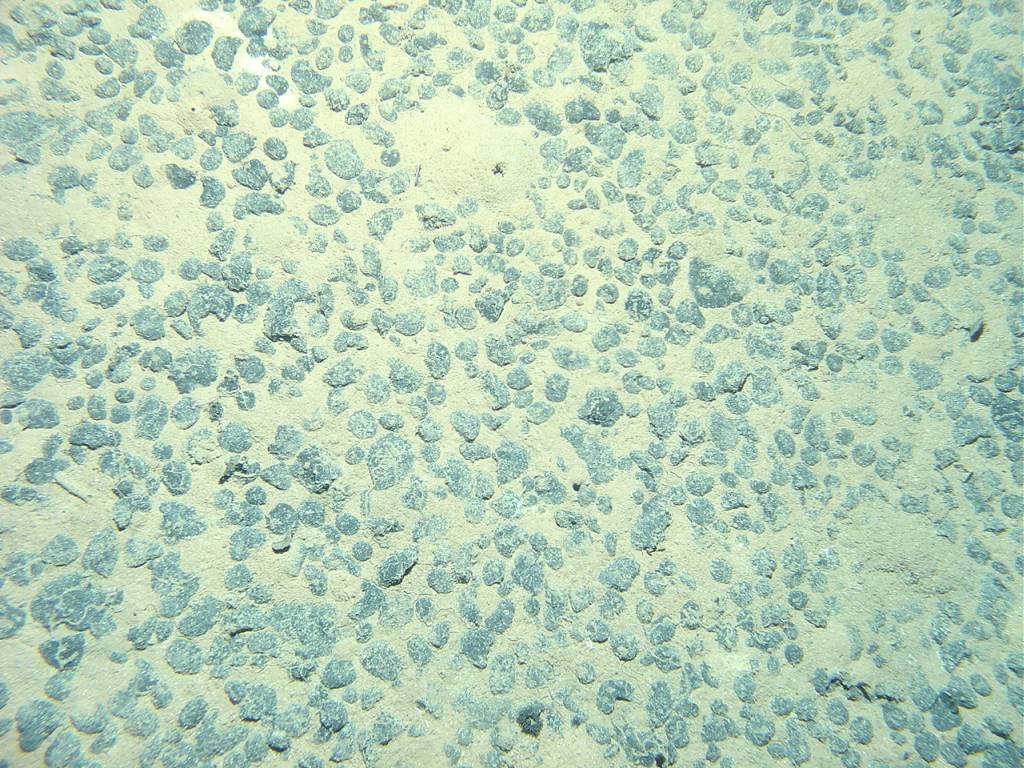
Website Phys Org had a call with Thomas Peacock. Thomas is professor of mechanical engineering and director of MIT’s Environmental Dynamics Lab. He has a potato-size rock on his desk courtesy of deep sea mining.
The polymetallic nodule contains nickel, cobalt, copper, and manganese and these are in demand for making batteries. So what’s the fuss? The fuss is the rock was 15,000 feet below sea level for 10 million years until someone scooped it up. Was that entrepreneurial inspiration, or desecration do you think? Do we have a right to change things down there?
A Rich Lode between Hawaii and U.S. West Coast
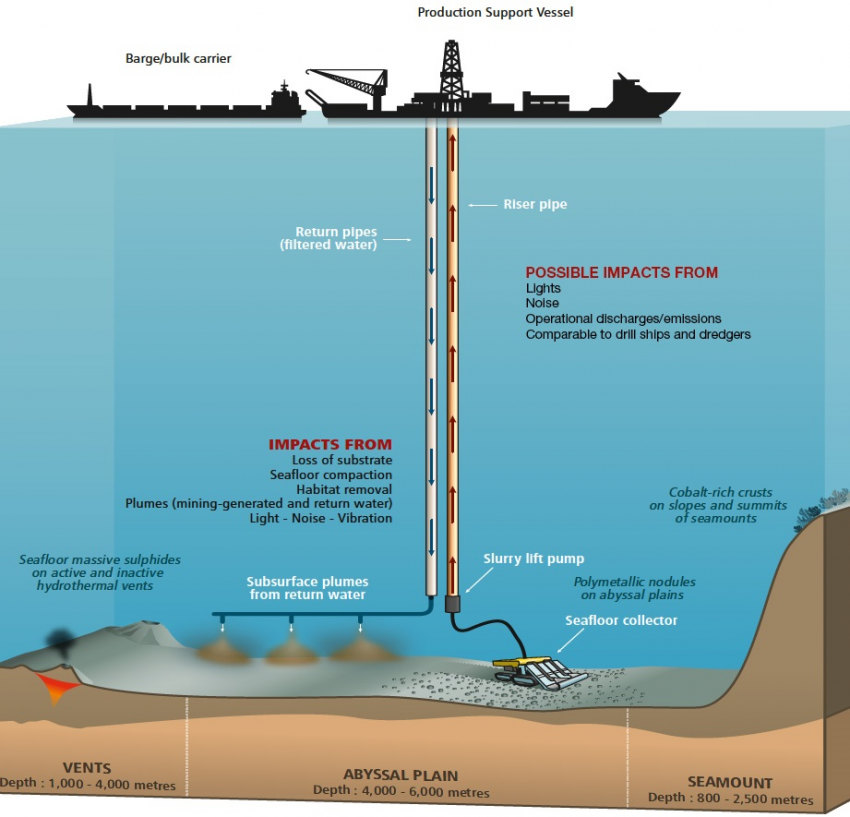
The Clarion Clipperton Fracture Zone has six times more cobalt and three times more nickel than all known land-based sources. It also has vast deposits of manganese, and a substantial amount of copper according to Phys.Org. However, Thomas Peacock is concerned about the long term effects.
Deep sea mining involves sending a collector vehicle 15,000 feet down to the seabed. This creates a large plume of disturbed debris as it vacuums up four inches of the seabed.
Nobody seems to know how far the plume travels, and what damage this could cause to sea life. But does this really matter, when we are on a mission to save humanity from global warming extinction?
Related
Prius Nickel Hydride Batteries Have Long Legs
Cobalt Improves Nickel Cathode Performance
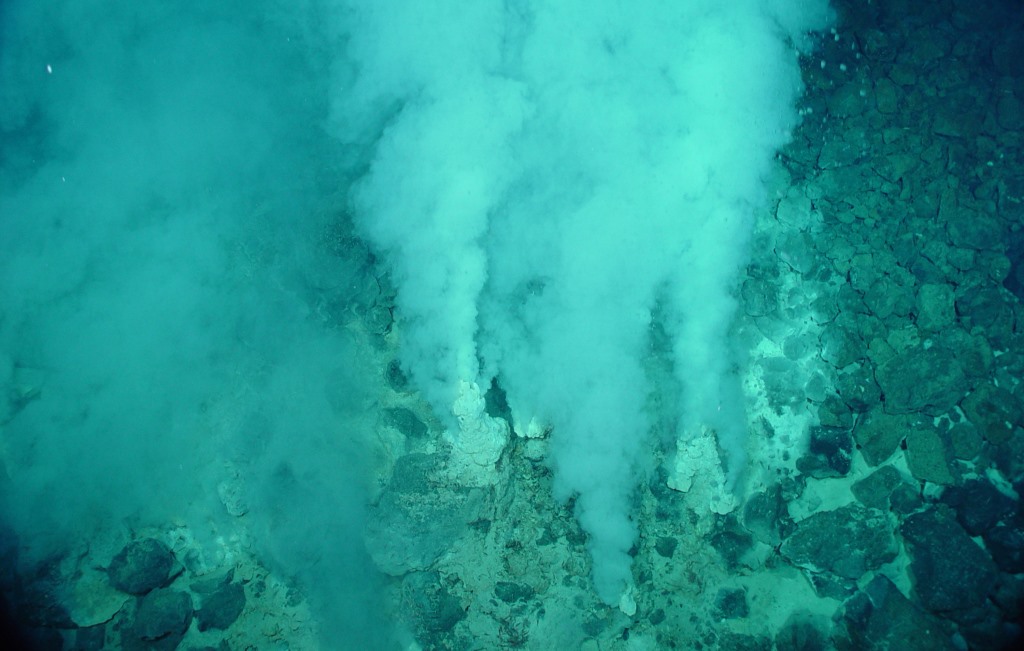
Preview Image: Hydrothermal Vent Emitting Liquid