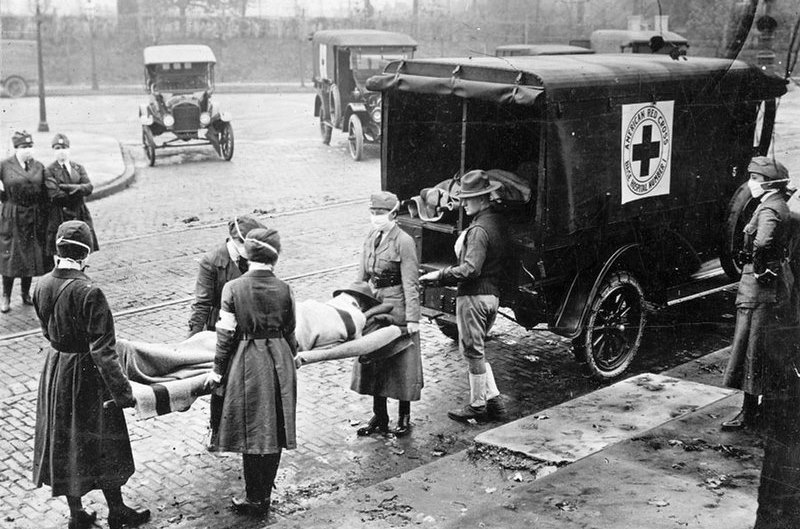
There have been many pandemics down the ages that disrupted lives of those affected. There appear to be signs their frequency is increasing in line with world population growth. We already know how pandemics of global proportions spread through human behavior. The challenge is controlling this while developing vaccines.
When a New Pathogen Enters the Human Chain
Humans have largely developed collective immunity to viruses and bacteria, meaning symptoms are mild or undetectable. However, new viruses can pass from animals and birds due to overlapping genes. Swine flu and bird flu are fairly recent examples. This may also be how COVID-19 invaded the human population.
Epidemiologists developed advanced understanding how these pandemics of global proportions spread through local populations, and beyond. Health authorities focus on new viruses when potential pandemics appear.
However, they inevitably face the problem of human indifference, which is a character trait that insists the future will be the same as the past. This is the challenge we face with COVID-19 where individual rights dominate over collective well-being. This is the underlying reason in turn why pandemics roll out so predictably.
How Pandemics of Global Proportions Inevitably Spread
1… A new virus enters an unsuspecting person, often from an animal. They are unaware of the threat and continue as usual. Meanwhile the virus replicates inside their body, and ships across to their contacts.
2… Some of these contacts go out into the broader and community and share the virus with others. At this point in time health professionals are unaware it exists, because there are no symptoms showing yet.
3… Doctors begin to report concerns, usually two weeks after the first infection. By then travel has transported the virus to other countries. Infection rates continue to rise as scientists investigate the new disease.
4… World Health Organization recommends ways to slow the transmission while laboratories develop new vaccines and treatments. Slowly, gradually the pace of the pandemic slows although new outbreaks do occur.
The situation gradually returns to normal to the extent populations adhere to these guidelines. Meanwhile the virus continues to mutate, and cause aftershocks. This then is the situation we find ourselves during the current pandemic. We ought therefore not to drop our guard.
Breaking News
Could Long COVID Lead to Heart Disease?