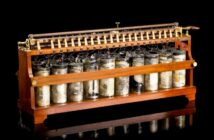
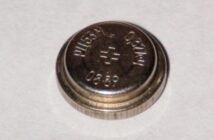
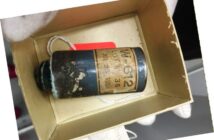
The Leclanche Cell was a step forward in the direction of popular batteries. Except for the fact its ammonium chloride electrolyte soon dried out, and rendered it useless. Leclanche himself had tried adding starch. Others experimented with cellulose, sawdust, spun glass, asbestos fibers, and gelatin. However, Gassner’s Battery finally cracked the code, when he immobilized Leclanche’s electrolyte with plaster of paris.
How Gassner’s Battery Matched the Moment
Carl Gassner may very well have been in the right place at the right time. Although he first studied medicine at University of Strasbourg, and then specialized in eye and ear disease. But he also conducted physics and chemistry experiments in the background, and these became more than his second string.
Back then, most electric doorbells in Germany ran off Leclanche wet cells in those early days. But their short lives frustrated Gassner’s pal, and so he immobilized Leclanche’s electrolyte with plaster of paris as porous binder in 1885. And then he added hydrophilic chemicals, and zinc chloride to slow corrosion of the zinc anode too.
Towards Commercial Zinc-Carbon Cells
Gassner patented his invention in Germany in 1886, and a year later in United States too (see link below). His dry cell version proved to be maintenance free, more solid, and able to work in any orientation without electrolyte spillage. Moreover, it provided a potential 1.5 volts, quite an achievement in those days.
The National Carbon Company began mass-producing their first version of the Columbia dry cell in 1896. However, they modified Gassner’s original design by replacing the plaster of paris with coiled cardboard. This freed up more space for the cathode, and made the battery easier to assemble.
A Tiny Electrical Miracle in Your Hands
And so it came to pass that energy-hungry nations finally had access to the world’s first convenient battery. And energy that made flashlights and other portable electric devices possible for the first time. Next time you hold a zinc-carbon battery in your hands, respect it for the chemical miracle it truly is.
More Information
Leclanche Cell Points To Battery Future
Experiments in Science: The Grove Cell