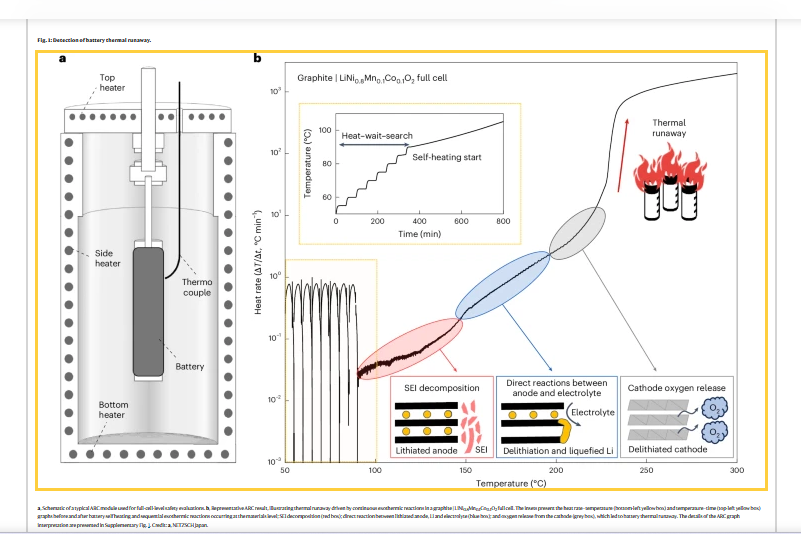
If we told you someone invented an unstable lithium-ion battery with safety in mind, we can imagine your reaction. Why would anybody want to do that, with e-bikes and scooters going up in flames every week? Finding an unstable lithium-ion battery in one piece, is like searching for a needle in a haystack though. It might therefore be easier to create an experimental runaway lithium battery, for safety research instead.
Overheating in Lithium-ion Batteries Is a Public Concern
A team of scientists from University of Tokyo teamed up with other colleagues, to find a way to test for lithium-ion battery safety. They deliberately built an unstable battery, so they could watch the warning signs before their eyes.
Being scientists working in a laboratory meant they did not have to follow commercial standards.This presented an opportunity to save money too:
- An 18650 commercial, rechargeable lithium-ion battery has an energy capacity of around 2,800 milli-ampere hours, and is 7 centimeters long.
- Whereas their experimental lithium-ion, pouch cell battery had a capacity of only 20 milli-ampere hours, and was just 3 centimeters long.
The smaller battery used just 0.1 gram of cathode-active material. This was a saving for them, when they were testing a runaway lithium battery for safety assessment.
We Need To Be Alert To Lithium-Ion Battery Runaway
All of us have these ‘everywhere’ batteries on our persons at work, at home or in between. If we shock them with high temperature, crushing, dropping, or vibration, we may trigger a chain reaction. What we have not known until now, is what is happening inside them.
The University of Tokyo team and their associates were concerned that thermal runaway testing was out of reach of citizens. They developed a simple equation, that incorporates heat accumulation and dissipation. These inputs allowed them to calculate the ‘thermal runaway factor’. And perhaps for us too, if they commercialize it.
More Information
A Battery System That Extinguishes Fires
Safe Battery Management and Disposal
Preview Image: Extract from Research Report