A number of battery scientists are continuing to wonder could iron-air battery sales surge, and challenge lithium-ion’s dominance. It’s an interesting question, as geopolitical tensions interfere with free international trade. Iron, unlike lithium, is universally available. So let’s explore this option, starting with refreshing our memories of how iron-air batteries work.
Working Principles of Iron-Air Batteries
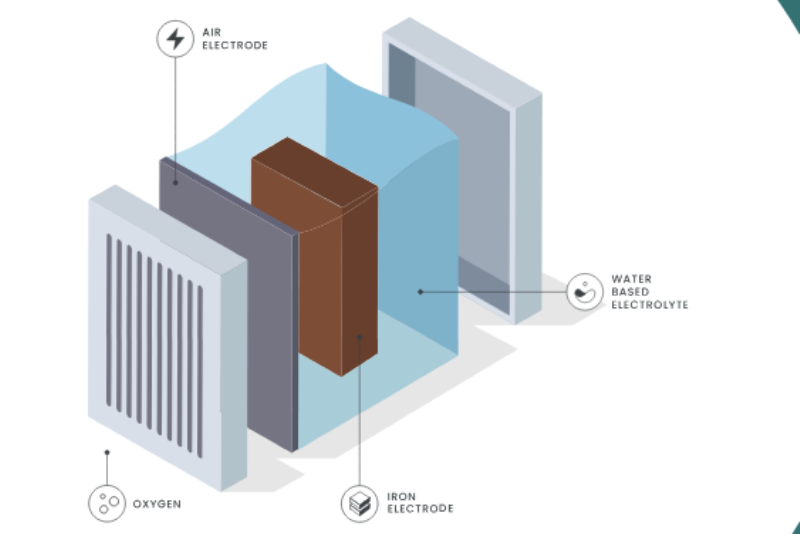
Iron-air batteries work by generating electricity when the iron rusts, and turns into iron oxide as it contacts air. This process cancels out when the battery recharges, and external electricity reverses the iron oxide by returning the oxygen to the air.
Air is free, and iron is one of the most widely produced, lowest cost materials available. Oil Price suggests that iron-air battery sales could surge, as working prototypes of commercial-scale versions emerge from laboratories.
Lithium is, as we know, the most effective way of storing electrochemical energy. However, this does come at a cost in terms of consumer safety. There are also environmental issues, and recycling the raw materials is an ongoing challenge.
Electricity utilities worldwide are casting around for viable alternatives to lithium-based batteries. Some utilities have suffered devastating lithium battery fires. They need a longer-term, safer storage medium soon.
Is This Iron Storage’s Moment in Time?
Iron-air battery chemistry’s trump card could be its potential for long-term energy storage. This is a must-have for power utilities, because they need to provide electricity after dark. Oil Price refers to iron-air cells as ‘100-hour batteries’. Is this why we could see iron-air battery sales surge soon?
We already see signs of commercial, grid-scale iron-air storage batteries. A start-up enterprise in the Netherlands has launched a pilot project they anticipate will scale up soon. These are not small batteries for our laptops and phones though.
They will supply the renewable utility energy we need to charge our devices, and much more after dark, and potentially around the clock. So yes, there is good reason to suspect we could see iron-air battery sales surge sooner than we think.
More Information
More Energy in Iron-Based Batteries