A flow battery contains energy but what is the origin? We know it stores this energy in its liquid electrolytes. Also that these liquids contain chemicals involved in reactions that release power when the battery operates.
Is Something Different About This Particular Energy?
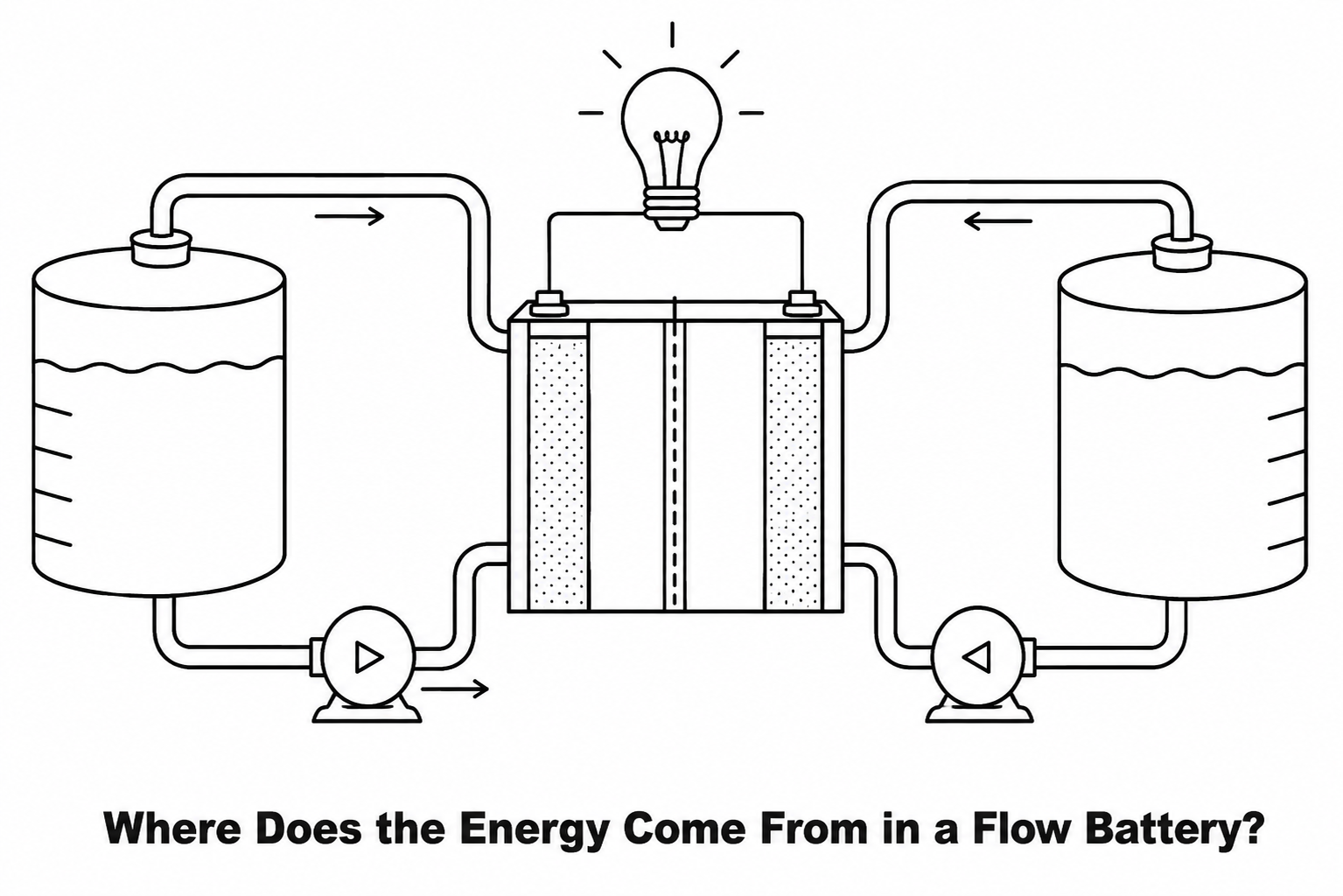
No, the energy is electrochemical energy just like an ordinary battery, although the arrangement is different. You see, the chemicals that store energy are held inside a conventional battery. Whereas In a flow battery, the energy-storing material is in external tanks.
The Big Difference Is There Are Two Separate Electrolytes
The electrolytes pump from the tanks though the battery cell and back. The two electrolytes are kept apart by a membrane inside the cell. Their chemical reactions create a difference in electrical potential between the two cell halves.
This difference drives electrons through an external circuit. The movement of electrons is the electrical current that can power equipment. This is how a flow battery contains and releases energy.
The Electrolyte Tanks Are Not Part Of The Battery Cell.
The two electrolyte tanks are therefore not part of the battery cell. They simply hold the electrolyte until energy is required. This gives flow batteries an unusual advantage.
We can increase the amount of energy they can store by using larger tanks and more electrolyte. However, the equipment that produces the electricity remains much the same.
The Energy In Flow Batteries Comes From The Electrolytes
When we charge a flow battery, external electrical energy changes the chemical state of the electrolytes. They are then ready to release that stored energy again. So, the energy in a flow battery is ultimately stored as chemical energy in the electrolytes.
Flow Battery Tanks Are a Convenient Way To Store Energy
The tanks provide a convenient way to store large quantities of energy-rich liquids outside the battery cell. This is the big difference from conventional batteries!
More Information From Our Battery Blog