Silicates are natural minerals containing silicon and oxygen, linked together in several patterns. Some 95% of Earth’s crust comprises silicate minerals, alumina-silicate clays, or silica according to BYJUS website. A Technical University of Denmark team is investigating batteries made from rock silicates. From what we hear they have a runner!
Potassium Silicate Batteries From Common Rocks
The Technical University of Denmark (DTU) researchers seem supremely confident. “Solid-state batteries using rock silicates will be an environmentally friendly, more efficient and safer alternative to lithium-ion in 10 years time,” they claim.
Lithium-ion batteries dominate electric transport, although this comes with legendary implications for safety and driving range. The raw lithium metal these batteries use is expensive, not readily available, and has a harmful environmental impact.
Therefore, the Danish researchers believe, the world needs a practical alternative that is abundant, and environmentally clean. We must also prepare for an increasing number of cathodes and anodes for electric vehicles, they add.
DTU researcher Mohamad Khoshkalam has been following up on batteries made from rock silicates, and has invented a working prototype that is not sensitive to temperature and humidity. He has also found how to shape it into a paper-thin layer inside his battery case.
Huge Potential for Paper-Thin Super-Ionic Material
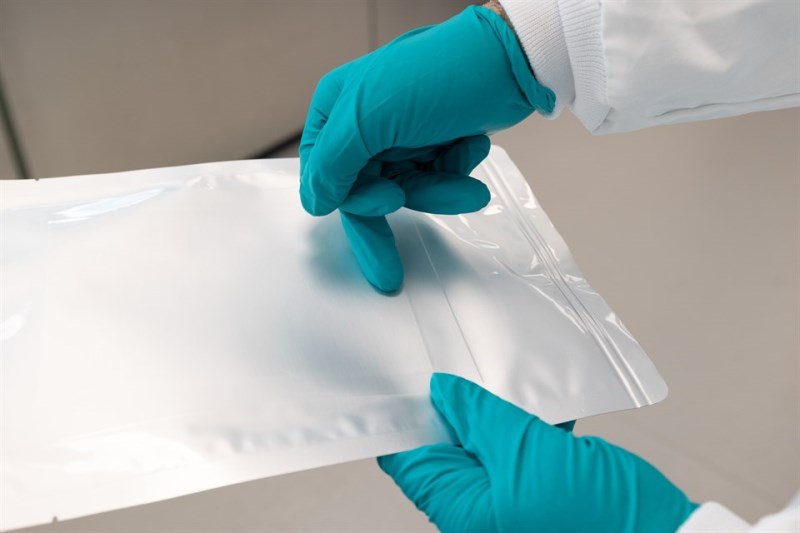
The DTU press release (see link below) describes the ‘huge potential’ of this discovery. The ‘milky-white, paper thin material’ conducts ions at 40 degrees, and is not sensitive to moisture. This will make it possible to assemble the batteries at room temperature, and in an open atmosphere.
Furthermore, the design does not require expensive and environmentally-harmful additive metals such as cobalt. These are currently added to lithium-ion batteries to achieve sufficient capacity and service life, but are rare.
Electrolyte conductivity depends on how fast the ions can move in the material. The ions in rock silicates generally move slower than the ions in lithium-based liquid or solid-state electrolytes, because they are larger and heavier.
But Mohamad Khoshkalam has found a recipe for a super-ionic material of potassium silicate, and a process that makes the ions move faster than in lithium-based electrolytes. This opens the door to batteries made from rock silicates, most likely.
More Information
Energy in Sand Beneath Our Feet
Graphene Cathodes Enhance Conductivity