Lithium metal batteries are promising candidates for next-generation, high-energy storage. However, their chemistry is currently notorious for several reasons. These deal breakers include the uncontrollable growth of dendrites on their anodes, that short circuits through the separator. However, hope could be on the cards with news of a better lithium-metal battery from Korea.
Breakthrough Hints At Better Lithium-Metal Batteries
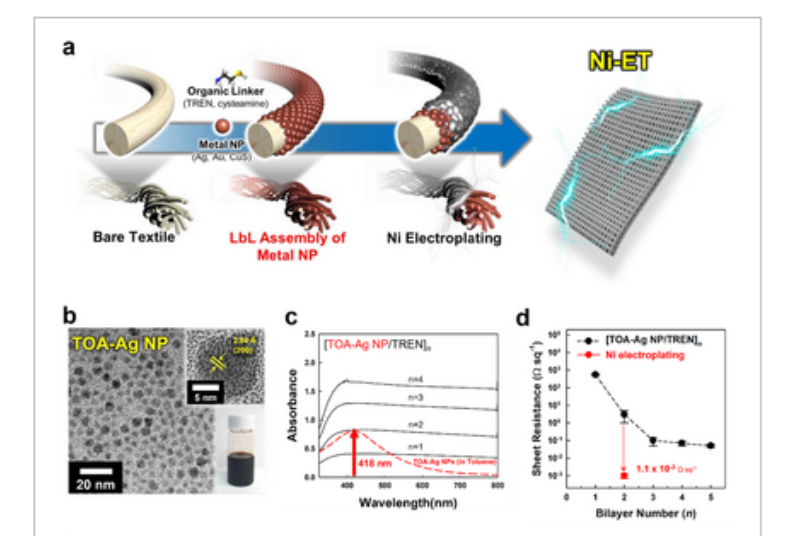
Scientists from Korea University, and George W. Woodruff School of Mechanical Engineering in Atlanta, Georgia, may have achieved a break through. Their research report on the Wiley portal that we link to below, alludes to a high-performance dendrite-free lithium textile anode.
This did not give much away, and so we turned to The News Wheel for more information. That website explained how a ‘silver-ion coating’ retained 96% efficiency after 1,300 charge-discharge cycles. This suggested to us that the researchers may have solved the dendrites issue in their laboratories.
We turned to The Cool Down website, to see what else we could discover about the better lithium-metal battery from Korea. They explained how the coating was ‘a fraction of the width of a human hair’.
This must be a mighty powerful material we thought, to stop aggressive dendrites with such a tiny cushion. Then we discovered that the coating comprises alternating layers of silver ions and trithiocyanuric acid. This raised the next question in our minds. Silver we know. What on earth is trithiocyanuric acid?
Is Trithiocyanuric Acid The Fix For Lithium-Metal?
Wikipedia informs us that planar trithiocyanuric acid, has a ‘sheet-like structure’ and comes in handy for treating waste waters. However, this time its purpose is to work with silver to guide lithium ions through the electrolyte.
The researchers laid down alternating layers of silver and trithiocyanuric acid on the anode. The News Wheel confirms how this combination coaxed the lithium-ions to distribute evenly across the anode surface.
This time there was no uneven plating that could grow into dendrites. Instead, there was a hint of better lithium-metal batteries from Korea and Georgia, Atlanta. But does this mean they have closed the case on dendrites? We will have to wait a little longer and see what transpires.
More Information
Stresses in Lithium-Metal Batteries
Soft Shorts in Lithium-Metal Batteries