Sodium is a low cost abundant material, with a high theoretical specific capacity when used in batteries. This means that sodium batteries could be a great replacement for lithium-ion ones, if only cheaper better sodium batteries worked that well in practice.
Tapping the Potential of Cheaper Sodium Batteries
Scientists from University of Chicago, and University of California San Diego, teamed together to take up the challenge. According to Tech Explore they ‘cracked the code on sulfur’ after they developed a practical, powerful lithium-sulfur conversion chemistry.
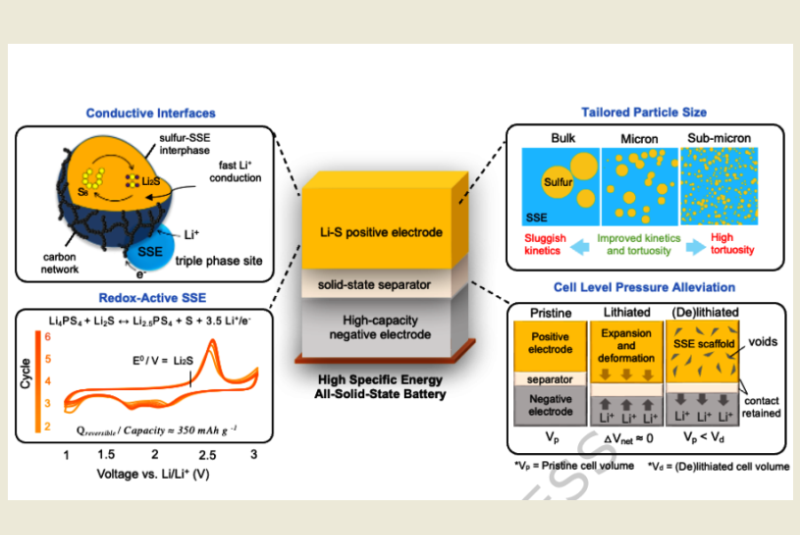
The current limitations of sulfur in batteries include its self-insulating character, that limits conductivity and ion movement. As a result, a large portion of the sulfur is usually inaccessible, electrochemically speaking, robbing the material of its full potential.
First, the Chicago and Californian scientists identified the ideal particle size for solid-state electrolyte powder. Then they came up with a new way to manufacture a sulfur-based composite cathode. The practical pouch cell that followed delivered an impressive discharge capacity.
How The Better Sodium Battery Emerged
Cheaper better sodium solid-state batteries moved one step closer, after the scientists developed their non-flammable solid-state electrolyte.
The next question was how to combine the sulfur active material, the solid-state electrolyte, and the conductive carbon powders that make up the positive electrode.
The team developed a one-step process, where they ground these materials together into a single powder. This created a novel interphase point, where the cathode and the electrolyte reacted together improving battery performance.
“Instead of adding new materials or coatings,” a team member explains. “We showed that simply arranging the existing materials more carefully allowed sulfur to react much more efficiently.
“The particle size of the solid electrolyte matters, because you are combining solid particles with solid particles,” he continues. ‘It’s how they stack with each other, or how they can be packed the closest in the cell stack, that matters.”
More Information
High Voltage Sodium-Sulfur Batteries
Lithium-Sulfur Smart Separator Impresses
Preview Image: Creating the All-Solid-State Battery