CDC’s confirmation that COVID-19 is airborne, reminds us to wear our face masks whenever we leave our homes. We should look more carefully when entering shopping centers, seeking gaps where we can safely walk. Lindsey Marr is a professor of engineering at Virginia Tech. To her, COVID-19 aerosols are like cigarette smoke.
Imagining COVID-19 Aerosols Like Cigarette Smoke Clears the Air
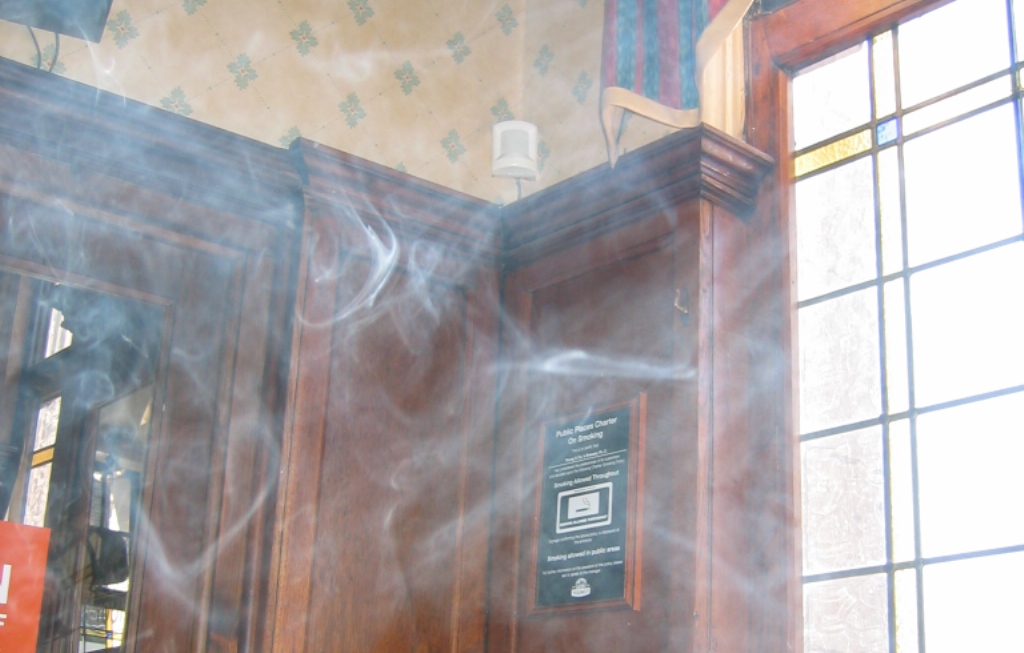
Lindsay Marr believes an easy way to imagine airborne particles is to visualize COVID-19 aerosols like cigarette smoke. That’s because smaller ones linger the same way, and we can breathe them in too. Moreover, they can accumulate in confined spaces where the air is still. Just like a poorly-ventilated room where smokers are puffing away.
When that reminds us of smoke-filled restaurants and pubs in the olden days, we get the picture. Do you remember unavoidably inhaling the smoke, and having an irritated throat and dry cough in the morning. ‘I believe pretty confidently that there is some element [of airborne transmission],’ White House advisor Dr. Anthony Fauci told CNBC.
So What Do We Do With This Piece of Information That May Not Suit?
It’s pretty much a scientific fact, according to a paper in American Association for the Advancement of Science (AAAS) Journal. The researchers say we are far more likely to inhale COVID-19 aerosols, than be sprayed by droplets. There’s a link to their paper at the end of this article, if you would like to research this further.
So what do we do, indeed, with this information? A double-layer cloth face mask does not provide sufficient protection, says Cory Stieg writing in CNBC health and wellness. Scarce N195 respirators are for health care workers and other medical first responders. Therefore, we should perhaps, stay away from places where cigarette smoke would linger in the air if they allowed it.
Related
The Coronavirus Can Be Spread in Particles
COVID-19 Infection Through the Air is Key
Preview Image: Cigarette Smoke in Still Air