Lithium-ion batteries are also known as Li-ion battery or LIB. It is a rechargeable battery, and it is commonly used in phones, laptops, electric vehicles and aerospace applications.
Li-ion batteries became popular because of its benefits:
- It has the best energy density – more energy can be stored in a space.
- It has no memory effect – gradual loss of the maximum energy capacity during repetitive recharge.
- It also has a slow loss of charge when stored.
However, Li-ion batteries can be hazardous. The battery contains a flammable electrolyte which can leak and cause a fire or a chemical burn. Manufacturers tried to address this issue by adding flame retardant additives and temperature sensors.
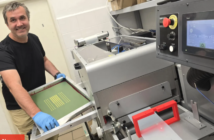
A group of Washington State University researchers developed a solution. The research was led by Katie Zhong, a Westinghouse Distinguished Professor in the School of Mechanical and Materials Engineering. To avoid fire hazards, different solid electrolytes were tried. However, conduction of electricity was poor. It also posed the problem of attaching the solid electrolyte to the anode and cathode.
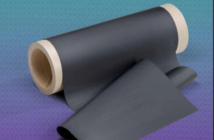
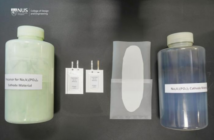
After many trials, the group developed a new Li-ion battery electrolyte that is not a fire hazard, conducts electricity well, and attaches to the anode and cathode. The inspiration for this electrolyte was gum, and it was designed by a graduate student named Yu “Will” Wang.
The new electrolyte material has a gum-like property. It is sticky and adheres well to battery components. It is a mixture of liquid and solid. The liquid part is responsible for conducting current. On the other hand, the solid part serves as a protective mechanism against overheating and fire. In cases when the material heats up, the solid part melts and breaks the conduction of electric current, therefore avoiding any fire hazard. The material is also lightweight and flexible, allowing it to be stretched and twisted without losing its ability to conduct current.
The results were published in Advanced Energy Materials. The researchers have also filed for a patent for their discovery. They hope that their product could soon be used in commercial batteries.
Related Links