Lithium-ion silicon anode batteries promise distinct improvements, over the lithium-ion variety with graphite anodes. These additional benefits include significantly higher theoretical capacity, and longer battery life. Although there have been technical problems that Amprius has apparently overcome, on the latest Airbus Zephyr 8/S high altitude platform station.
Lithium-Ion Silicon Achieves New Stratospheric Heights
The Airbus Zephyr program is a remarkably persistent project, to locate free-flying unmanned drones in Earth’s atmosphere. The first successful flight in 2006 flew for 82 hours, but much work has been done since then.
The latest AALTO offering, the Zephyr 8/S, boasts some impressive statistics. It weighs just 130 pounds, but has an 82-foot wingspan. For 67 days its lithium-ion silicon anode batteries have lifted its 11-pound payload – including 5-pounds of batteries – 70,000-feet into the air.
The long-term intention is to deploy these high altitude platform stations in the upper atmosphere as an alternative to satellites. The unmanned, battery-powered aircraft could, for example, deliver mobile phone services, monitor the environment, and act as a communication relay.

More Things That Make This a Remarkable Story
It can take months to prepare a conventional satellite, and launch it into the sky on a rocket. This process is expensive too, although reusable rockets are starting to bring project costs down.
But if the electronic equipment on the satellite fails irretrievably, then the project is doomed. The satellite becomes a useless lump, cluttering our atmosphere until the awesome power of gravity consumes it.
The Zephyr 8/S has potential to plug that gap, because it launches on its own battery from a runway. We can only begin to imagine how this could bring communication back after natural disasters.
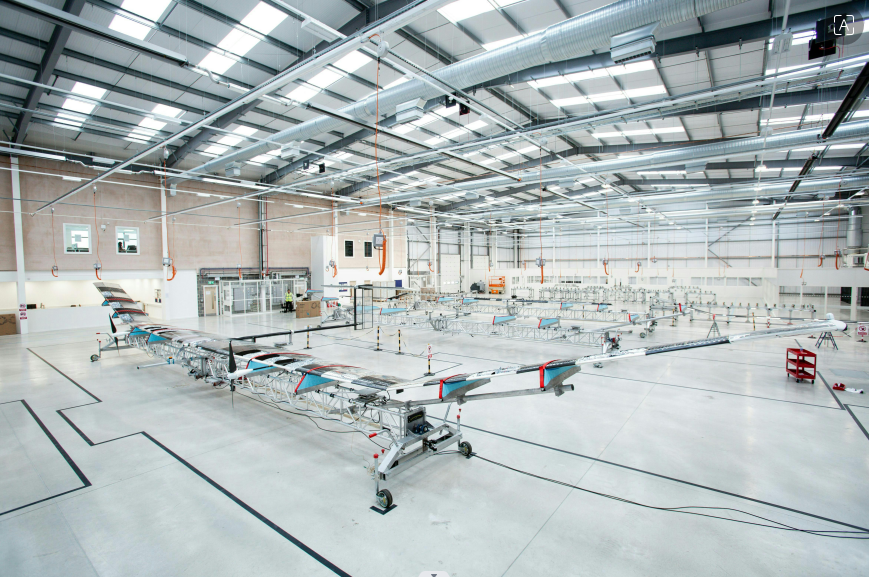
The Zephyr project could literally not have taken off without its batteries, or been able to function without the solar panels on its wings. Portable electricity running on batteries is everywhere in our world. Just imagine trying to cope without your battery-powered devices for one day!
More Information
Sulfur Batteries Soar with Wings