Ions carrying electrical potential have to travel through electrolyte in batteries, to release their energy so we can access it. We can imagine this being a bit of a struggle, as ions overcome resistance and fight for their place in a ‘traffic jam’. Australian scientists have just found a way to create natural tunnels for sodium ions in solid-state sodium-ion batteries. So now they can travel along a ‘multi lane highway’ instead.
Tunnels Through Electrolyte For Sodium-Ion Batteries
A team from Australian Institute for Bioengineering and Nanotechnology of University of Queensland, developed this ground-breaking solution. Their point of departure was as follows:
- Conventional sodium-ion batteries use liquid electrolyte, which can overheat and catch fire, due to dendrites short circuits,
- Solid-state sodium-ion batteries use solid electrolyte. This resolves these issues, but slows the flow of the ions, affecting performance.
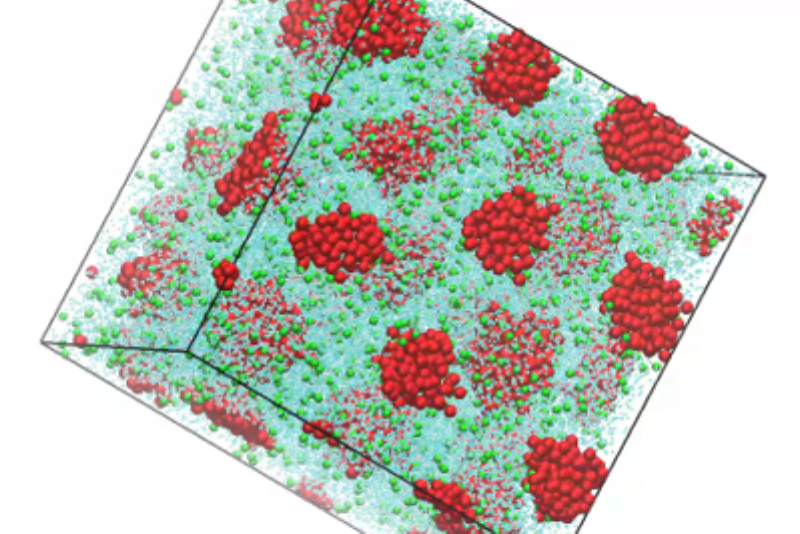
The Queensland researchers developed a new, fluorinated block copolymer with chemical structure P(Na3-EO7)-PFPE. This material forms a plastic-like solid electrolyte, which naturally forms internal tunnels wide enough to let sodium ions flow smoothly and efficiently.
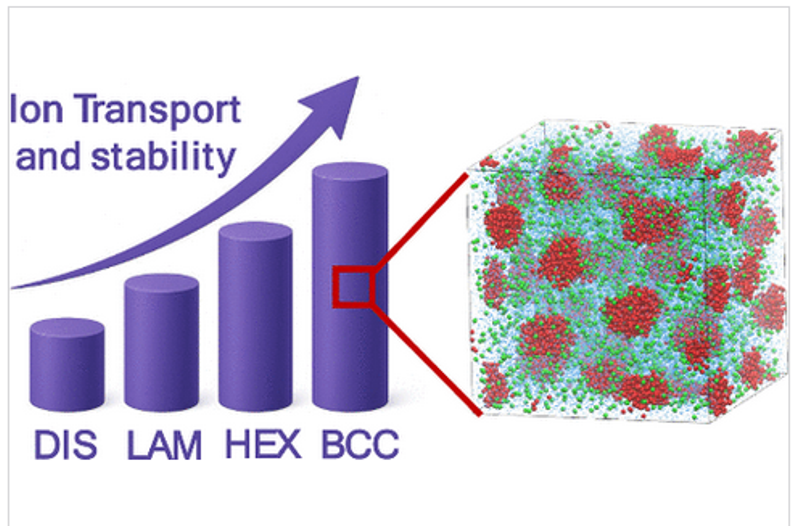
“We tested a range of internal structures to find the one that would give us the best battery performance,” the scientists explain. “By adjusting the layout to form what’s known as a body-centered cubic (BBC) structure, we were able to enhance the material’s natural tunnels for sodium ions.
“This modification allows sodium ions to move just as smoothly and efficiently as they do in lithium batteries,” they add. While it also reduces the risk of harmful dendrites leading to overheating and possible fires.
Further Evidence The Electrolyte Tunnels Work
The team at Australian Institute for Bioengineering and Nanotechnology, tested their prototype solid-state sodium-ion battery at 80°C / 176° F. Their battery retained over 91% of its original capacity after 1,000 charge / discharge cycles, and lasted for another 4,000 repetitions.
“Our next challenge now is to optimize its efficiency at room temperature. This is the critical step toward making our natural tunnels for sodium ions commercially viable,” adds group leader Cheng Zhang.
More Information
Sodium-Ion Battery Revolution Is Approaching
Sodium-Ion Batteries Ringing The Bell
Preview Image: Tunnels Through Solid Electrolyte
Media Release By University of Queensland September 18, 2025