The Argonne National Laboratory near Lemont, Illinois is an academic research center dedicated to working for the United States Department of Energy. It has involved itself with landmark projects including early research into nuclear power generation, proton accelerators, and fast neutron reactors. It also applies its technology to a leading lead battery research program.
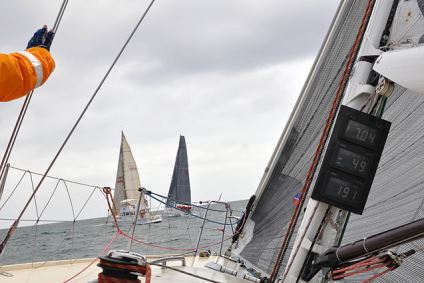
Small craft sailors will be especially interested in research Argonne is conducting into efficient lead-acid batteries, in collaboration with two battery manufacturers. Mariners rely on electricity to position themselves globally, communicate ship-to-ship and ship-to-shore, and stay in touch with what is happening with the weather. Hence their batteries are of vital importance to them.
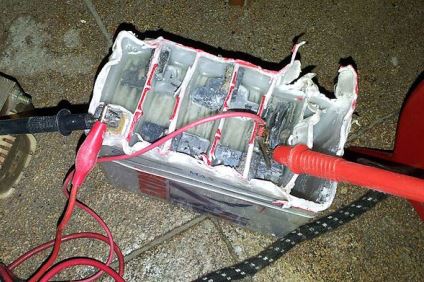
Marine batteries and those used in recreational vehicles typically comprise individual cells in series providing approximately 2.1 volts each on full charge. Each cell contains two lead plates with an insulator between, immersed in diluted sulfuric acid inside a plastic case.
The research centers on probing the fundamental transport processes whereby electrons flow between cathode and anode electrodes. “We’ve known for years that the core limitation is the utilization of lead inside the batteries,” a commercial partner explains. “Lead-based technology has significant unused performance potential that can be tapped by improving active material utilization inside the battery.”
The Argonne National Laboratory hopes to accelerate improved lead battery performance by making its hitherto unavailable research methodology available to the battery industry. Scientists will contribute advanced methods for understanding materials, while manufacturers will bring practical experience to the table.
“The lead battery industry has not had enough access to the right analytic tools to thoroughly investigate this phenomenon,” explains an engineer. “This new collaboration will enable us to use Argonne’s technical facilities, so that we hopefully will uncover what has been unknown for many years.”
Related