All batteries contain electrodes between which ions shuttle, and electrolyte that manages the process. Therefore, the electrolyte is the subject of much investigation, because its composition influences the efficiency of the process. A new type of battery from crab shells emerged from a report in the journal Matter on September 1, 2022. The key element is chitosan, a sugar that comes from the outer skeleton of shellfish, and these include crab, lobster, and shrimp.
Is This New Type of Battery from Crab Shells Safe?
Chitin, from which chemists derive chitosan is one of the most abundant carbohydrates in food. That’s because it manifests in the cell walls of fungi, and the exoskeletons of arthropods such as crustaceans, insects and mollusks. It is also synthesized by at least some fish and amphibians too.
Moreover, WebMD classifies chitosan as alternative medicine that might reduce how much fat and cholesterol the body absorbs from foods. But it also apparently helps blood clot when applied to wounds. They advise some people use the product for ‘high blood pressure, high cholesterol, obesity, wound healing, and many other purposes’.
Therefore, this evidence suggests Chitosan is a natural, organic product apparently safe for human ingestion. Indeed Wikipedia identifies the following further proven applications:
- The parent material chitin triggers crop defenses against diseases, and has potential use as fertilizer according to Wikipedia.
- Chitosan also strengthens paper, and plays a role in food processing. It helps form edible films, and thicken and stabilize food emulsions.
And Now For Battery Electrolyte Too
Newsweek explains how U.S. chemists developed the new type of battery electrolyte from crab shells. Their motivation behind the modified zinc battery was to eliminate non-biodegradable polypropylene, and polycarbonate separators in lithium-ion batteries.
Their new electrolyte is a gel comprising chitosan, a derivative of chitin. The chemists describe this as ‘appealing in terms of safety and sustainability, demonstrating the promise of sustainable biomaterials for green and efficient energy-storage systems’.
Breaking News
FDA Class One Recall of Faulty Heart Batteries
Heat Severe Weather and Utility Grids
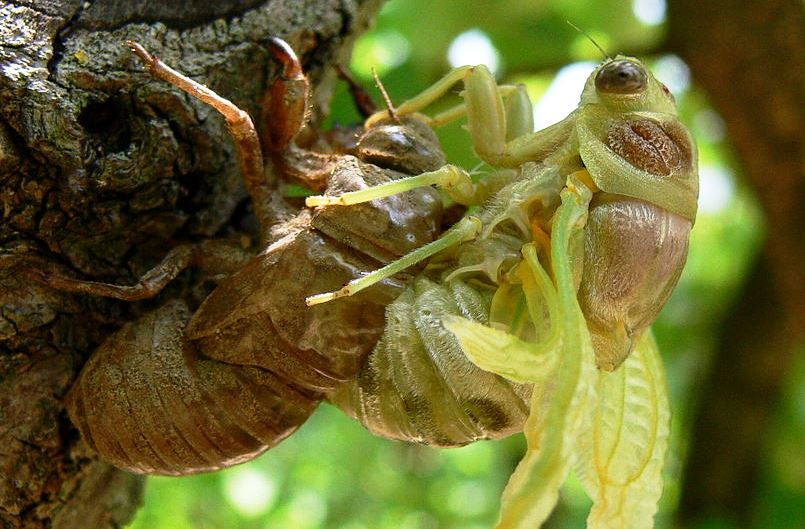
Preview Image: Cicada Emerges From Chitinous Exoskeleton