Researchers from the University of Waterloo in Ontario, Canada have produced a working prototype of a magnesium-ion battery cell. The two team members, who collaborated with University of California Berkeley, and U.S. Sandia National Laboratories have impressive profiles themselves.
Linda Nazar is a professor in the Department of Chemistry, Waterloo University, and also Canada Research Chair in Solid State Energy Materials. While Chang Li is a postdoctoral fellow in the university’s multidisciplinary Nazar group of students.
Waterloo Magnesium-Ion Battery Substitutes Lithium Chemistry
The Waterloo University model uses magnesium, instead of lithium battery chemistry. However, early examples going back as far as 2020 failed to produce a voltage to match lithium-ion. Other than that, magnesium was far more abundant and less expensive too, and so interest lingered.
Linda Nazar and Chang Li picked up the ball in their current research project. They have now succeeded in taming magnesium-ion battery chemistry. They have produced a working example, that we believe is less costly than lithium.
What We Know About the Inner Workings of This Battery
All batteries have a cathode on the positive side, an anode on the negative side, and an electrolyte that allows the flow of electrical charges. Early magnesium batteries following these principles, only managed to to produce one volt. Even standard AA batteries do a half-volt better than that!
“The electrolyte we developed allows us to deposit magnesium foils with extremely high efficiency,” Chang Li explains. “And it is stable to a higher voltage than successfully tested before. All we need now is the right cathode to bring it all together.”
What’s more, this electrolyte is affordable, non-flammable, and non-corrosive too. “This is another big step on the road towards commercializing a functional magnesium battery,” Linda Nazar adds proudly.
“We hope our work will open up a door for us, or someone else, to discover and develop the right positive electrode, that will complete the magnesium battery puzzle.” We wish them the best on their exciting journey.
More Information
Solid State Sulfide Electrolyte ‘Breakthrough’
Magnesium Ions Dance Through Solid Electrolyte
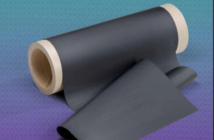
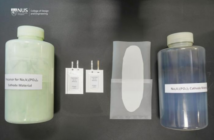
Preview Image: Prototype Magnesium-Ion Battery