Scientists often wonder where the energy goes in batteries, on the basis we cannot destroy it, only transform it. Researchers at Virginia Tech decided to investigate battery interfaces, which they describe as “tricky spots buried deep inside the cell”. They stumbled over a new imaging technique by accident, while examining an electrolyte they invented.
Energy Shuttles Through Battery Electrolytes
Batteries store their energy in charge-carrying subatomic particles, that science calls ‘ions’. They receive this energy from chargers and send it to devices, via electrolyte sandwiched between their electrodes.
These electrolytes may be liquid, solid, gel-like, or even multi-phase shifting from rigid to flexible, depending on circumstances. Much work goes into developing the most efficient carrier electrolyte.
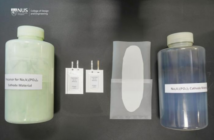
One of the Virginia Tech scientists discovered a multi-phase, molecular ionic composite electrolyte, back in 2015. Since then, the team has searched for ways to deploy it in lithium and sodium batteries.
However their test batteries “were plagued with weird growths, and unhelpful behaviors”, at the point where the electrolyte and electrodes interfaced. The team refer to this point as the “Bermuda Triangle of Batteries”.
Is This Where the Energy Goes In Batteries?
The scientists were determined to find out what was causing the weird growths, and unhelpful behaviors at their electrode / electrolyte interfaces. They paid many visits to Brookhaven National Laboratory over the years, as part of their research.
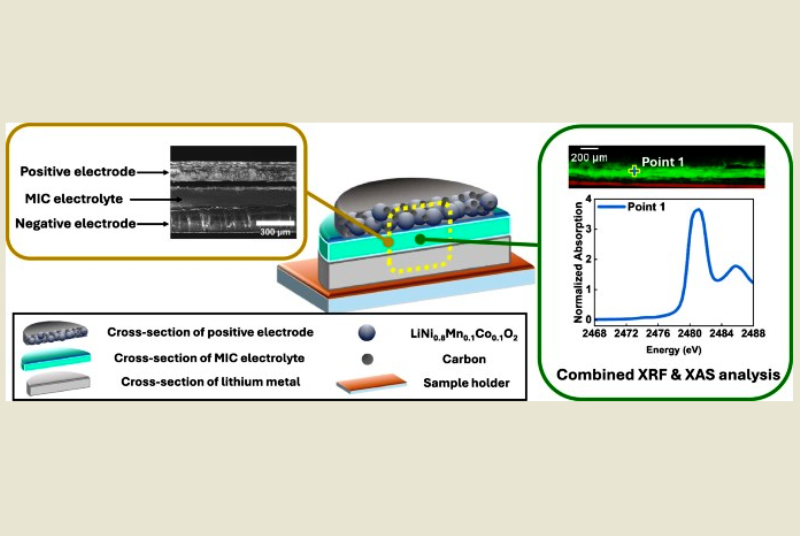
The laboratory allowed them access to its ‘tender energy x-ray beam line’ equipment. This uses ‘soft x-rays’ to study the electronic, and atomic structures of materials, although the laboratory mainly used the equipment to study meteorites and fungi.
The equipment enabled the Virginia Tech scientists to observe depletion of the mobile conductive phase at the interface, contributing to battery performance degradation. In their own words, “part of the architectural support system degraded as the battery cycled, leading to eventual failure”.
They team plan to use this new knowledge to finally observe both the intricate structure, and the chemical reactions of the buried interfaces. We wish them further success, as they continue probing where the energy ‘disappears’ in batteries into the ‘Bermuda Triangle’.
More Information
Solid Electrolyte Interface Trips Lithium-Metal
Stresses in Lithium-Metal Batteries
Preview Image: Taking Synchrotron X-Ray Measurements