The gallant rescue of a soccer team and their coach in Thailand, brought the risks divers face into sharp relief. Because we were concerned the electric torches had lithium batteries that could explode in the dark. What would have happened if there were a lithium fire. Therefore, we are relieved to hear news of zinc batteries for divers that can’t catch alight.
U.S. Navy Sponsors New Generation Batteries for Divers

Media company Axios first broke the news in May 2017. At the time, the prototype idea used a water electrolyte, and a sponge-like zinc structure enabling uniform movement of ions. Because they hoped this would prevent dendrites forming that eventually short-circuit lithium-ion terminals.
Fast-forward a year and a bit, and we find the project is making progress. Military Aerospace now reveals BST Systems and EaglePicher technologies both have Navy contracts to supply undersea batteries for divers using silver-oxide zinc battery cells. The specification calls for 750 amp hour rechargable batteries for deep-submergence undersea vehicles.
What We Know About Silver-Oxide Zinc Cells

Silver-oxide zinc cells have a very high energy-to-weight ratio. Plans are already in place to install them in laptops and hearing aids. However, Military Aerospace believes larger, custom ones are feasible where ‘superior performance outweighs cost’.
The U.S. Navy already uses them in torpedoes, and submarines as back-up while they are common in manned and unmanned spacecraft too. We find it an interesting thought that the new batteries for divers already play a role in deep oceans and distant space. This makes sense because silver-oxide chemistry can deliver one of the highest specific energies of all known electrochemical power sources.
In conclusion, we wish to celebrate the gallant divers who rescued those boys and their coach from a deep, flooded cave. And indeed the fortitude of the boys who stayed together despite the challenges. We salute them all.
Related
The First Batteries in Space Were Silver-Zinc
Why There are Lead-Acid Batteries on Submarines
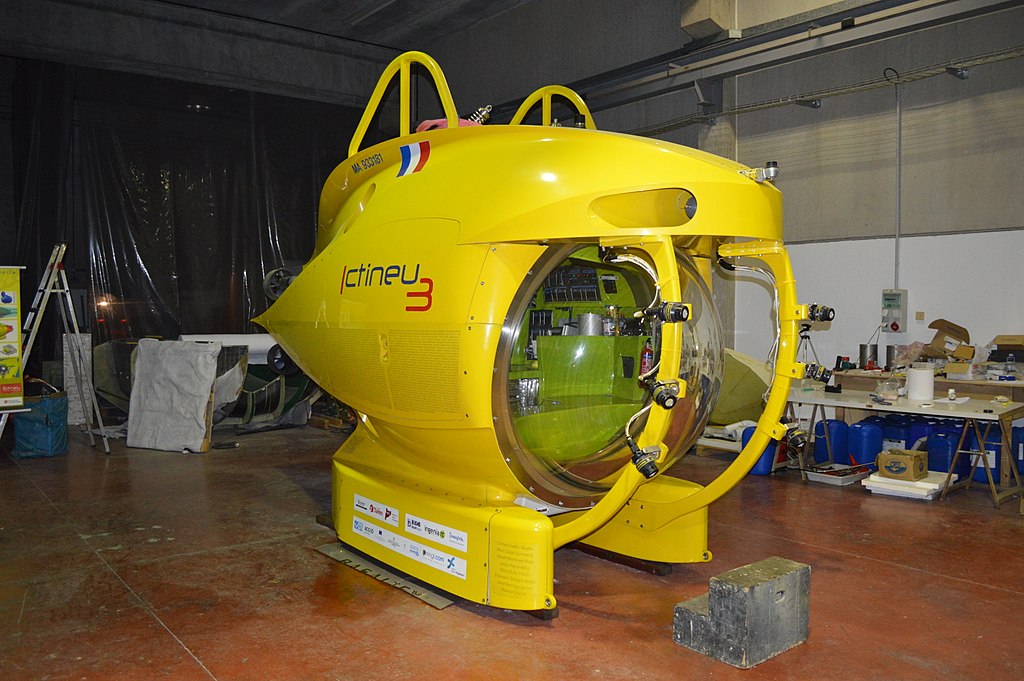
Preview Image: Ictineu 3 Submersible