The amazonian rain forests of Ecuador may provide shelter for 15% of Earth’s biodiversity. But little-known indigenous tribes are appearing as logging invades their pristine space. These people must adapt to carbon-rich living if they are to survive. But solar power boats are emerging, as a counter movement that says, enough is enough.
Promoting Solar Power Boats on Wichimi River
The Wichimi River in Ecuador’s rain forest may not deserve a mention on a tourist map. But to the twelve indigenous Achuar communities, the meandering river is a road system through the forest they call home.
They previously used gasoline-powered boats as their main means of collective transport. But these were noisy, smelly, and polluted the Wichimi waters with oil. The fuel was also expensive, because aircraft had to fly it in from Ecuador’s capital, Quito.
However, that was before anthropologists, communicators, and similar-minded people formed the Kara Solar alliance with the Achuar tribes. Their goal was to create solar-powered river transport and energy networks, and they are succeeding.
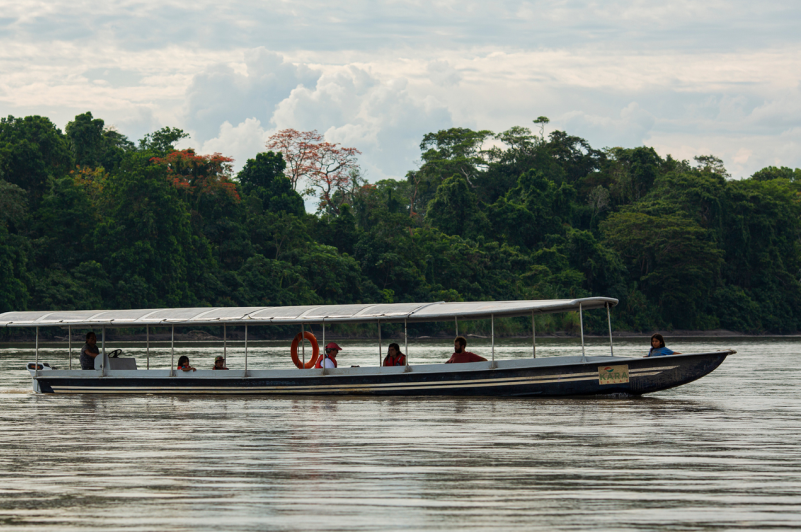
‘Kara’ is the Achuar word for ‘a vision that becomes real’. Together, the alliance is liberating the tribes from their bondage of carbon, as they implement a model in which isolated people build sustainable communities in a way that is good for all.
The throbbing sound of diesel engines is no more. The haze from their pollution has dissipated. The oily patches on the river surface are gone. This is so much smarter than building new roads. For every kilometer they add would destroy another patch of forest. The silence of solar power boats is helping prevent this threat.
The Nuts and Bolts: How This Project Works
The solar power boats, which belong to the Achuar tribes are different lengths, with the largest carrying 20 passengers. They can achieve speeds of up to 12 miles per hour, with a cruising range of up to 60 miles.
The numbers are impressive. The electric boats have completed over 3,000 trips, carrying around 1,000 passengers over almost 300 miles per month. Their most popular roles are transporting school children, and providing wildlife tours for eco-tourists.
There are nine solar charging stations along the stretch of river, in case their batteries run low. These facilities double as solar energy grids, supplying power for schools, internet access, computer labs and eco-lodges. Please bring on more.
More Information
Gustave Trouvé Launches Battery Electric Boat