Global demand for lithium batteries is stretching the raw resources we have available. This is obliging us to recycle what we already have, which also reduces subsequent carbon footprints. Today we share breaking news of greener aqueous battery recycling at Rice University in Texas, USA.
Why Greener Aqueous Battery Recycling Now?
Current lithium-ion battery recycling generally uses aggressive, high energy methods that take several hours. The Rice University procedure, in stark contrast, uses a water-based solution that only takes minutes.
During those few minutes this ground-breaking discovery separates the waste from the valuable metals. The big difference is the water-based solution of amino chlorides, which bypasses the drawback of harsher methods.
“What we’ve shown.” explains the undergraduate student who made the discovery, “is that you can achieve rapid, high-efficiency metal recovery using a much simpler, water-based system.” His greener aqueous battery recycling method recovers used lithium, cobalt, and manganese metals.
This greener, gentler procedure is ‘light years away’ from the popular hydrometallurgical method. That’s because the latter dissolves the metals in a highly acidic solution, which is an open door to environmental pollution.
The New Rice University Battery Recycling Procedure
The Rice method pioneered by undergraduate student Simon M. King, explores alternative leaching agents instead. A solution based on hydroxylammonium chloride stood out from the crowd for him in terms of performance.
Hydroxylammonium chloride is highly soluble in water, although it is also toxic and corrosive. So while it is not as green as we might have wished, the shorter processing time saves time and money.
“We were surprised by just how fast the reaction occurs, especially without the involvement of high temperatures,” the student continues. “Within the first minute, we’re already seeing the majority of the metal extraction take place.”
The new procedure extracts 65% of key battery materials within the first minute at room temperature. This increases to 75% after a few more minutes. There should be significant savings from the lower temperatures and shorter reaction times of the procedure, developed under guidance of senior academics.
More Information
Plasma Unlocks Battery Materials for Recycling
Recycling Batteries With Molten Salts
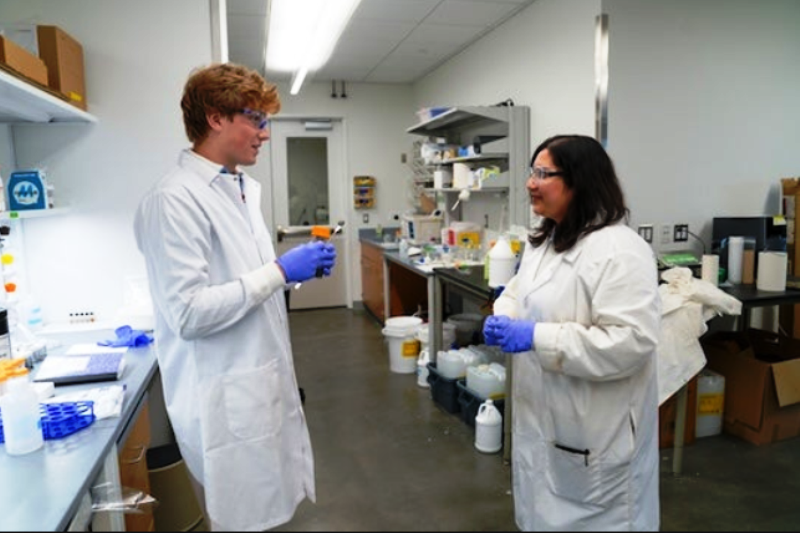
Preview Image: Simon King and Colleague