Gustave Trouvé was an electrical researcher, and innovator born in France in 1839 of modest parents. He made a name for himself by miniaturizing electric devices including building his own batteries. However, he began working for a clockmaker after ill health ended his dreams of becoming a qualified locksmith.
Gustave Trouvé Discovers a World of Electricity
We don’t know why Gustave Trouvé moved to Paris in 1865, when he was twenty six. However, he soon abandoned his clockwork world in favor of the exciting new universe of electricity and batteries.
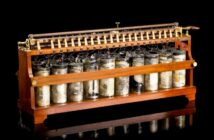
He set about exploring new applications for electricity, and appeared regularly in scientific journals including La Nature. He may have used a Leclanché cell at first, to source his own electricity. Although this undoubtedly was too bulky for his miniaturized devices.
Trouvés down-scaled applications included a portable military telegraph, and a hand-held microphone. But he also developed several medical apparatus including a prototype endoscope, and a dentist’s drill. As well as a sewing machine, and an electric razor.
But a World of Electric Transport Enticed Him
Portable, rechargeable batteries were beginning to make inroads into horse-drawn transport. Gustave Trouvé responded by fitting an electric motor, and a Leclanché cell to an English James Starley tricycle. However, he was unable to patent this, since it was an application of existing technology.
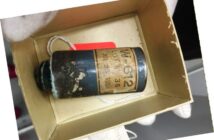
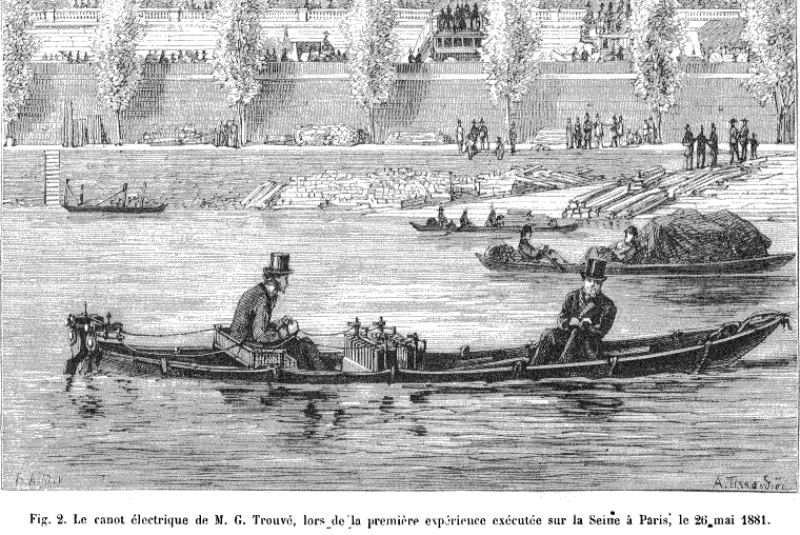
And so the ever-innovative Gustave Trouvé invented a portable outboard electric motor, running off his proprietary down-scaled Leclanché cell instead. This was a new, standalone application that he could potentially apply to patent himself.
His electric motor for the sixteen-foot boat he named Le Téléphone was an instant success. Soon he was cruising up the River Seine at 0.6 miles per hour, and downstream nine times faster. While this was scarcely half rowing-speed for a similar narrow boat in 1881, it held great promise for the future of water transport.
More Information
Moritz von Jacobi Demos First Electric Boat