It seems incredible looking back, but lead-acid cells were the first rechargeable batteries ever. But that’s not the end of the miracle. Our lead-acid batteries still use the same basic chemistry Gaston Planté invented back in 1859, and they are as popular as ever. We thought it would be interesting to travel in time and trace this remarkable story.
Batteries Were the Original Human-Made Source of Electricity

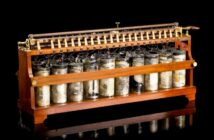
There was no electricity for experiments before Allesandro Volta invented the world’s first battery in 1800. This consisted of alternating zinc and copper discs, with brine-soaked cloth or cardboard between them. It produced continuous stable current, although this was not strong enough to be really useful.
It took a while, but in 1836 John Frederic Daniell invented the first practical source of electricity using a pair of electrolytes. Its longer, and more reliable output of 1.1 volts enabled the rollout of telegraph networks. Remember, there were no generators or electricity grids back then. However, when a Daniell cell stopped working the user tossed it in the trash. There was no recycling back then either.
The First Rechargeable Batteries and Dry Cells
A number of useful innovations followed, culminating with Alfred Dun’s nitro-muriatic acid battery that powered an incandescent streetlight for twenty hours. However, there was also good progress with electricity generation in parallel, thanks to Michael Faraday’s work.
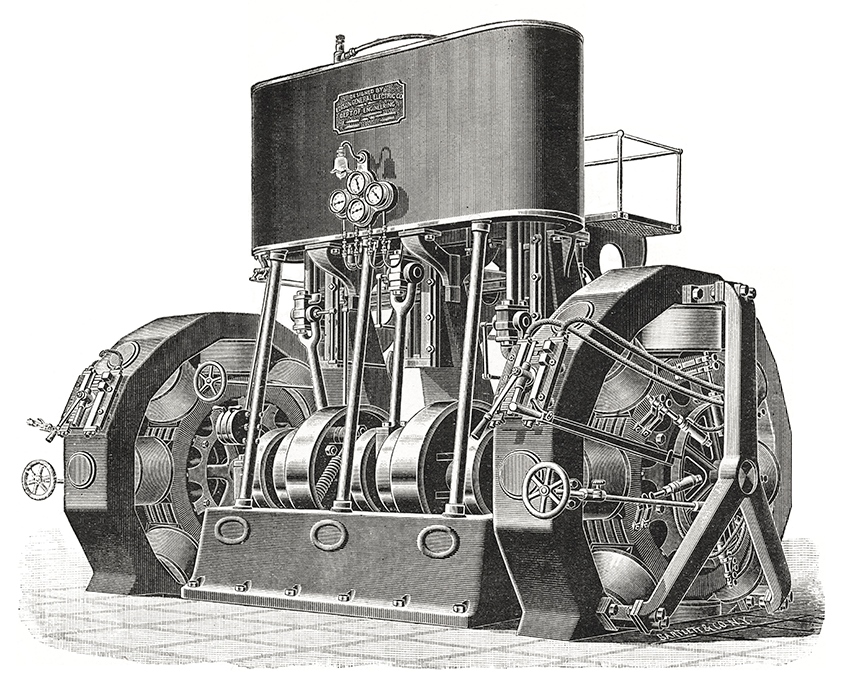
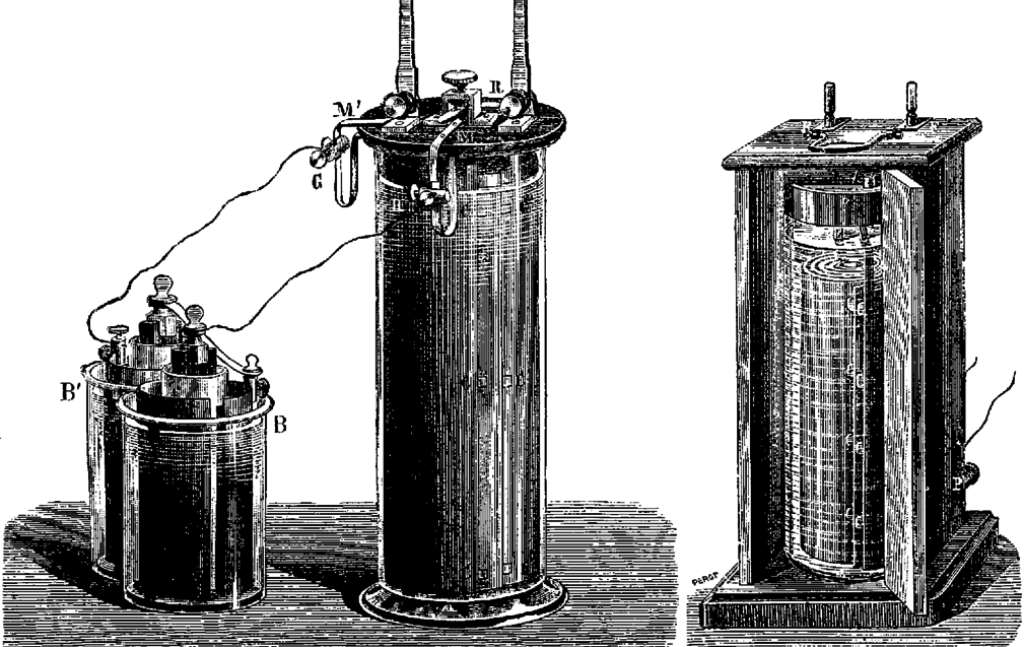
In 1859, 11 years before the first commercial electricity production, Gaston Planté made a breakthrough. That was when he discovered he could charge a lead acid battery by passing a reverse current through it. His batteries used lead anodes and lead dioxide cathodes immersed in sulfuric acid. They produced an electric current by exchanging electrons.
These were the first secondary cells available for recharging after their primary (initial) power ran down. That’s quite a story to tell about the first rechargeable batteries but we thought you would find it interesting.
Related
Gaston Planté’s Lead-Acid Cell Battery
Making Voltaic Batteries in Mum’s Kitchen
Preview Image: Gaston Plantés First Lead Acid Batteries