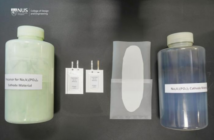
Preventing lithium-ion batteries from overheating when in out-of-spec condition, is perhaps the greatest challenge the technology faces. A group of scientists associated with Yi Cui of Precourt Institute for Energy made a new discovery. They found that thermal runaway gas production may be the best early warning sign of lithium-ion batteries overheating.
Why Thermal Runaway Gas Production Matters
Lithium-ion battery management systems typically monitor, and report on temperature and voltage output, according to Power Tech and others. They use this information to detect warning signs of individual cells entering out-of-spec conditions. Battery management systems can shut cells down if they move beyond safe operating parameters.
Lead researcher Yi Cui and associates wondered whether lithium-ion battery management systems were monitoring the optimum parameters. They concluded, after detailed research, that thermal runaway gas production could be a better early warning sign. But what is it exactly?
We investigated, and discovered lithium-ion batteries produce large amounts of gas during thermal overheating. These gases include a high proportion of colorless, odorless, tasteless, but flammable hydrogen gas. Scientists have known for a while that thermal runaway gas production is a detection signal of lithium-ion batteries overheating.
Moreover Gas Production is a Superior Warning
The researchers assessed the behavior of several different battery types to determine their gas production timing. Those battery types included lithium-nickel-manganese-cobalt-oxide, and lithium-iron-phosphate varieties. And they found that their unique gas signals were better failure warnings than temperature, voltage, or pressure.
The team converted this finding into a more comprehensive indicator of thermal runaway in lithium-ion batteries. Their proposed ‘thermal runaway degree’ formula is the product of the molar quantity of gas production, and the square root of the maximum temperature during the thermal runaway process.
Yi Cui and associates recommend further research incorporating other triggers, such as gradient heating, overcharging, and nail penetration, to further refine their formula. They would also like to see lithium-ion batteries included that are at various states in their aging cycle. We welcome this work, and will monitor progress in this fascinating part of our battery world.
More Information
Managing Thermal Runaway in EV Batteries
Reducing Lithium Battery Fire Risks at Sea
Preview Image: Monitoring L-Ion Thermal Runaway