Electric cars and batteries have always been in a mutual, symbiotic relationship. This was never truer than in the early days of electric cars, when the inventor first had to upgrade batteries to deliver the amount of energy they needed. Ányos Jedlik and Sibrandus Stratingh both experimented with small-scale models. However, it took the likes of Thomas Parker to produce the first full-scale electric car.
The Life of the Eclectic Inventor Thomas Parker
Thomas Parker was the son of an iron molder at a Shropshire ironworks in England, where he also worked for a while. The company fabricated cast-iron products, providing Thomas with a great introduction to casting parts for his own inventions.
However, his thinking took a new direction when the young man, now 19 visited the 1862 international Exhibition in London. Because there he laid his eyes on electric telegraphs and wet batteries for the first time. Intrigued, Parker attended chemistry lectures in Manchester in 1866.
Thomas Parker Migrates to Chemistry and Electricity
This new knowledge gained him the role of chemist in charge of the electroplating department at the ironworks. Here, his tasks included replacing battery cells, and operating the dynamo he designed, and built himself.
By 1882 Thomas Parker was a partner in a business in Wolverhampton, England, where they manufactured lead-acid batteries, dynamos, and electric street lighting. However more exciting innovations followed, after his company supplied equipment for the first electric tramway in England.
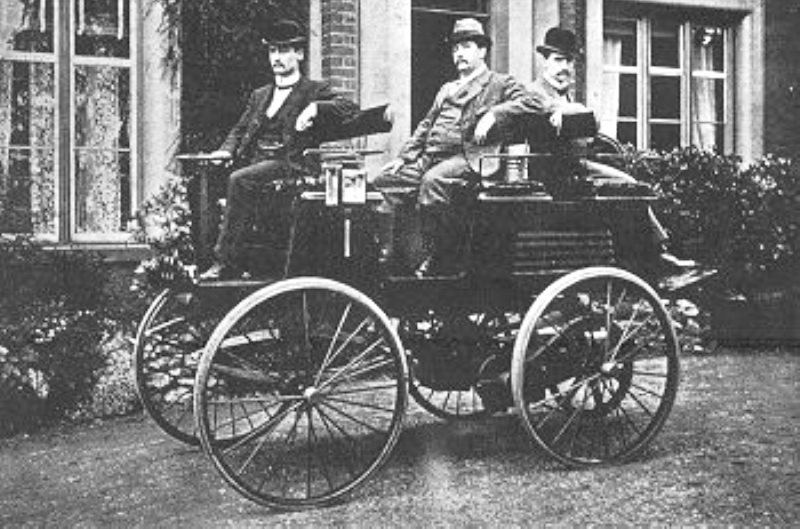
First, he and his partner successfully tested a prototype battery-powered train in Birmingham. And then they began experimenting with road-based electric vehicles, and built several prototypes. Alas, that’s all we could find out about those four ‘horseless carriages’ they made. Because apparently all that remains is one single photograph we show.
However, our historic personality for today did not stop there. In 1892, he designed and built a high-voltage DC distribution system that supplied electricity in Birmingham, Oxford, and parts of London. And then went on to electrify the London underground railway too.
More Information
Ányos Jedlik Creates First Automotive Object